An AC running but not cooling is a particularly frustrating failure. The fan hums, air comes out of the vents, yet the house stays warm. Usually the cause is restricted airflow rather than a broken compressor. In fact, several of the likely causes cost nothing to fix. This guide works through nine reasons an AC runs but does not cool, starting with what you can check yourself.
Cause 1: A Clogged Air Filter
Check this first, every time. A blocked filter starves the system of airflow, so the coil cannot absorb heat from your home.
Pull the filter out and hold it up to a light. If you cannot see light through it, replace it. In severe cases the evaporator coil freezes over, which stops cooling entirely. Our guide on how often to change your air filter explains the right schedule for your home.
Cause 2: A Frozen Evaporator Coil
Open the indoor air handler and look for ice on the coil. Ice means the coil cannot transfer heat.
The fix is to switch the system to fan only and let it thaw for several hours. Do not chip at the ice. Meanwhile, replace the filter and open all the vents. If it freezes again, you likely have low refrigerant or a serious airflow restriction.
Cause 3: A Dirty Outdoor Condenser Unit
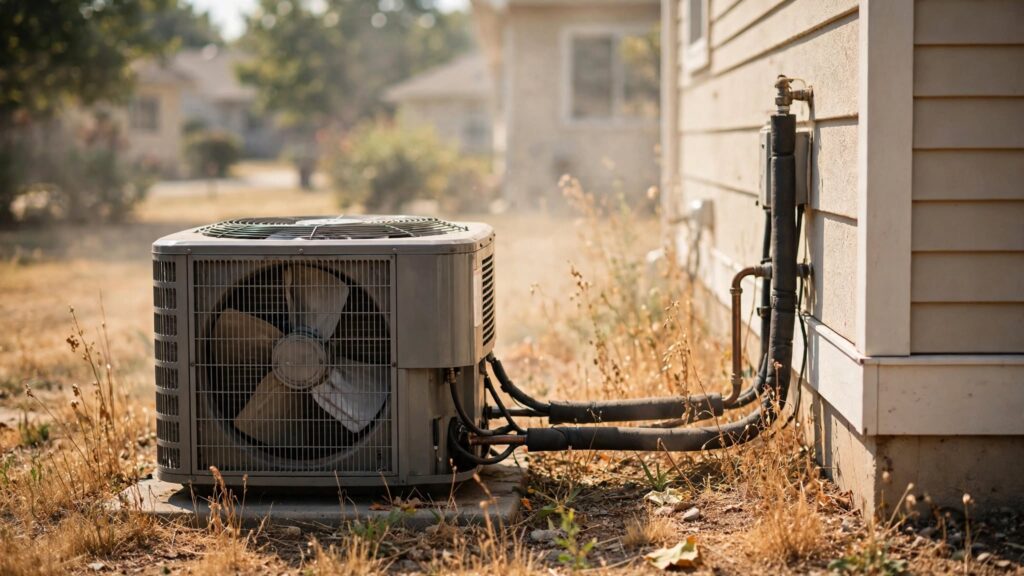
The outdoor unit rejects heat into the air. When its fins are packed with grass clippings, pollen and dirt, that heat has nowhere to go.
Switch the power off at the disconnect, then clear debris and rinse the coil gently from the inside out with a hose. Also cut back any plants within two feet of the unit. Our guide on how to clean AC condenser coils covers this in detail.
Cause 4: Low Refrigerant From a Leak
Refrigerant is not consumed, so low refrigerant always means a leak. Signs include ice on the refrigerant line, a hissing sound and air that is only slightly cool.
This is not a DIY repair. Handling refrigerant requires certification under EPA Section 608 rules, and simply topping it up without fixing the leak wastes money and harms the environment.
Cause 5: Thermostat Problems
Check the obvious things before assuming equipment failure. Make sure it is set to cool rather than fan, that the temperature is set below the current room reading, and that the batteries are fresh.
Also consider location. A thermostat in direct sunlight or above a heat source reads high and cycles incorrectly. Our guide on the best thermostat temperature for winter explains how setpoints affect runtime in the opposite season.
Cause 6: Blocked or Leaking Ductwork
If some rooms cool and others do not, suspect the ducts. Closed dampers, crushed flex duct and disconnected joints all starve parts of the house.
Walk through and open every supply register. Then check accessible duct runs in the attic or basement for separations and obvious gaps. Sealing leaky ducts with mastic or foil tape makes a real difference, and never use ordinary cloth duct tape for this.
Cause 7: A Failing Capacitor
The capacitor gives the compressor and fan motors the jolt they need to start. When it weakens, the outdoor fan may spin while the compressor never engages.
The classic symptom is a humming or clicking outdoor unit with warm air at the vents. A capacitor is an inexpensive part, but it stores a dangerous charge even with the power off. Leave this to a technician.
Cause 8: An Oversized or Undersized System
An undersized unit runs continuously and never quite catches up on hot days. Oddly, an oversized unit performs badly too, because it cools quickly and shuts off before removing humidity. The result feels clammy rather than cool.
Neither is a repair. However, knowing this explains why some systems simply never feel comfortable.
Cause 9: Heat Gain From the House Itself
Sometimes the AC works fine and the house is working against it. Sun through uncovered windows, poor attic insulation and air leaks all add heat faster than the system removes it.
Close blinds on sun-facing windows during the day. In addition, our guides on how to insulate an attic and how to seal air leaks cover the improvements with the biggest effect on summer comfort.
A Logical Troubleshooting Order
- Check the thermostat settings and batteries.
- Replace the air filter.
- Look for ice on the indoor coil, and thaw it if present.
- Inspect and clean the outdoor condenser.
- Open every supply and return vent.
- Check the breaker and the outdoor disconnect.
- Measure the temperature difference between a supply vent and a return vent. A healthy system shows a drop of 15 to 20 degrees.
- If the drop is small, call a technician.
Mistakes to Avoid
- Do not close vents in unused rooms. That raises duct pressure and reduces overall airflow.
- Do not chip ice off a frozen coil.
- Do not use a pressure washer on condenser fins, because they bend easily.
- Do not add refrigerant yourself.
- Do not run the system continuously while it is frozen.
- Do not stack items against the outdoor unit.
When to Call an HVAC Technician
Call for help if the coil keeps freezing, if you suspect a refrigerant leak, if the compressor hums without starting, or if the temperature drop across the system stays below ten degrees after basic maintenance. Annual professional servicing also catches most of these problems before summer. Our guide on how to lower your electric bill explains how much a well-maintained system saves.
Final Thoughts
An AC running but not cooling is usually an airflow problem, and airflow problems are mostly free to fix. Change the filter, clear the condenser, open the vents and check for ice. Work through those first, then measure the temperature drop to decide whether you genuinely need a technician.
Questions About an AC Running but Not Cooling
What should I check first?
The air filter, every time. Restricted airflow causes more of these cases than any mechanical fault.
Why is there ice on the indoor coil?
Low airflow or low refrigerant. Switch to fan only, let it thaw, then replace the filter.
How do I know it is time to call someone?
Measure the temperature drop across the system. With an AC running but not cooling, a drop under ten degrees after basic maintenance means you need a technician.
Should I close vents in unused rooms?
No. That raises duct pressure and reduces airflow, which often makes an AC running but not cooling even worse.
What temperature drop is normal?
Fifteen to 20 degrees between return and supply. An AC running but not cooling will typically show under ten.