When your furnace smells like burning, the first question is whether it is harmless or urgent. Often it is simply dust burning off the heat exchanger on the first cold day. Sometimes, though, it signals an electrical fault or a cracked heat exchanger. Therefore, identifying the specific smell matters enormously. This guide explains what each odour means when a furnace smells like burning, and what to do about it.
Start Here: The Smells That Mean Shut It Down Now
Deal with the dangerous cases first.
Rotten Eggs or Sulphur
This is a natural gas leak. Utilities add a sulphur odourant specifically so leaks are detectable.
Do not touch light switches, do not use your phone indoors and do not try to find the source. Leave the house immediately, then call your gas utility’s emergency line and the fire service from outside.
Burning Plastic or Melting Wires
An acrid plastic or fishy smell points to overheating electrical insulation. Switch the furnace off at the breaker and call an HVAC technician before running it again.
Smoke or an Oily Burning Smell
Switch it off and investigate. This can mean a failing blower motor, an oil burner problem or something burning inside the ductwork.
The Smells That Are Usually Normal
Dusty or Slightly Scorched, on the First Run of the Season
This is by far the most common cause. Dust settles on the heat exchanger over summer and burns off when the furnace fires for the first time.
It should fade within one to two hours of running. Open a few windows to clear the air, and change the filter beforehand to reduce it. If the smell persists beyond a few hours, treat it as something else.
A Faint Metallic Warmth
Some metallic smell when the heat exchanger reaches temperature is normal, particularly with newer units. It should be subtle and should not sting your eyes or throat.
Cause 1: A Clogged Air Filter
A blocked filter restricts airflow, so heat builds up inside the cabinet instead of moving into the house. That overheating produces a scorched smell and can trip the high-limit switch.
Replace the filter and see whether the smell clears. Our guide on how often to change your air filter explains how frequently this should happen.
Cause 2: Something in or Near the Furnace
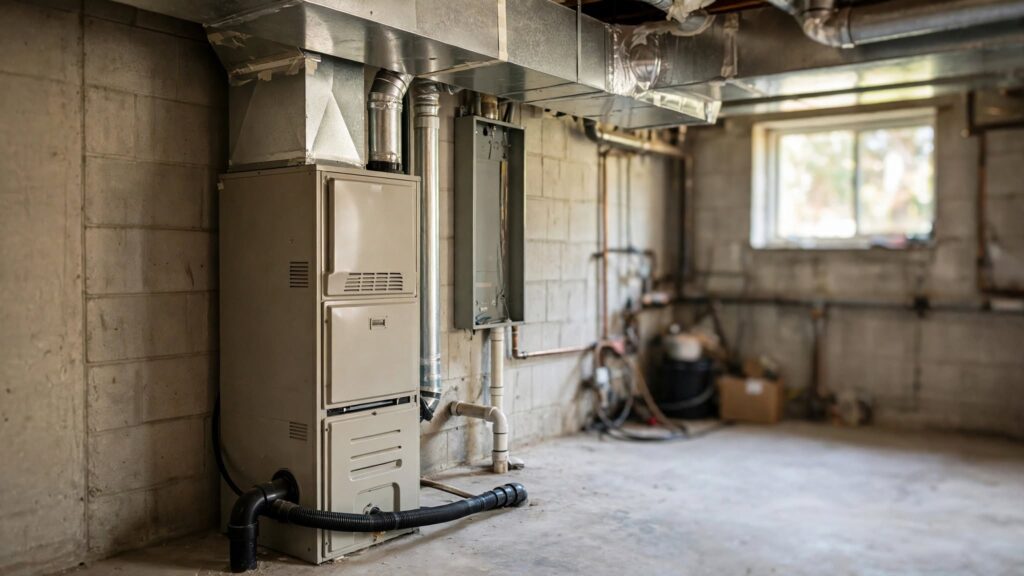
Check around and inside the cabinet. Items stored against a furnace are a genuine fire hazard, and people leave cardboard, paint tins and cleaning products there surprisingly often.
Also look for debris that has fallen into a floor register. Keep a clear zone of at least three feet around the unit.
Cause 3: A Failing Blower Motor
A motor with worn bearings or a slipping belt overheats and smells hot. Listen for squealing, grinding or a humming that changes pitch.
Older motors need periodic oiling at their ports, though most modern ones are sealed. If the motor is hot enough to smell, have it inspected rather than continuing to run it.
Cause 4: A Cracked Heat Exchanger
This is the serious mechanical failure. A cracked heat exchanger can let combustion gases, including carbon monoxide, enter your living space.
Warning signs include a sharp or formaldehyde-like smell, soot around the furnace, a yellow rather than blue burner flame, and visible rust. Shut the furnace off and call a technician immediately.
Most importantly, fit carbon monoxide alarms on every level of the home. The CDC notes that carbon monoxide is colourless and odourless, so you cannot rely on smell to detect it. Our guide on how often to replace smoke detectors covers testing and replacement intervals for combination alarms too.
Cause 5: Dirty Burners
Dust and rust on the burners cause uneven combustion and an unpleasant smell. A technician cleans these during an annual service, which is one of the reasons yearly maintenance is worth booking.
Cause 6: A Dirty or Leaking Duct System
Sometimes the furnace is fine and the ducts are the problem. Dust, pet dander and even dead rodents in the duct run produce smells when warm air passes through.
Check that returns are not pulling air from a dusty basement or garage. Sealing duct leaks also helps, and our guide on how to seal air leaks covers related sealing work.
What to Do, in Order
- If you smell gas, leave immediately and call from outside.
- If you smell burning plastic, switch off the breaker.
- If it is the first cold day and the smell is dusty, let it run an hour with windows open.
- Replace the air filter.
- Clear everything stored near the furnace.
- Check that carbon monoxide alarms are working.
- If the smell persists or returns, book a technician.
Mistakes to Avoid
- Do not ignore a persistent burning smell because it seemed normal at first.
- Do not store anything against the furnace.
- Do not run the system with a visibly dirty filter.
- Do not go without carbon monoxide alarms.
- Do not attempt to inspect a heat exchanger yourself.
- Do not search for a gas leak with a flame.
Prevent It Next Season
Book an annual furnace service before heating season begins. In addition, change the filter on schedule and vacuum the registers each autumn. Running the furnace briefly in early autumn burns the dust off at a time when you can ventilate comfortably.
Our guide on how to winterize your home includes heating system preparation, and our guide on the best thermostat temperature for winter helps reduce unnecessary runtime.
Final Thoughts
When a furnace smells like burning, identify the smell before you decide what to do. Dusty odours on the first cold day are usually harmless and clear within an hour. Gas, burning plastic and sharp chemical smells are not, and those warrant shutting the system down and calling a professional straight away.
Questions About a Furnace That Smells Like Burning
Is a dusty smell normal?
On the first cold day, yes. It is dust burning off the heat exchanger and should fade within an hour or two.
Which smells mean I should shut it off?
Rotten eggs, burning plastic or a sharp chemical odour. Leave the house immediately for a gas smell.
Could it be carbon monoxide?
Carbon monoxide has no smell at all. If your furnace smells like burning and alarms are sounding, leave and call for help.
Can a dirty filter cause it?
Absolutely. Restricted airflow traps heat in the cabinet, and that is a frequent reason a furnace smells like burning mid-season.