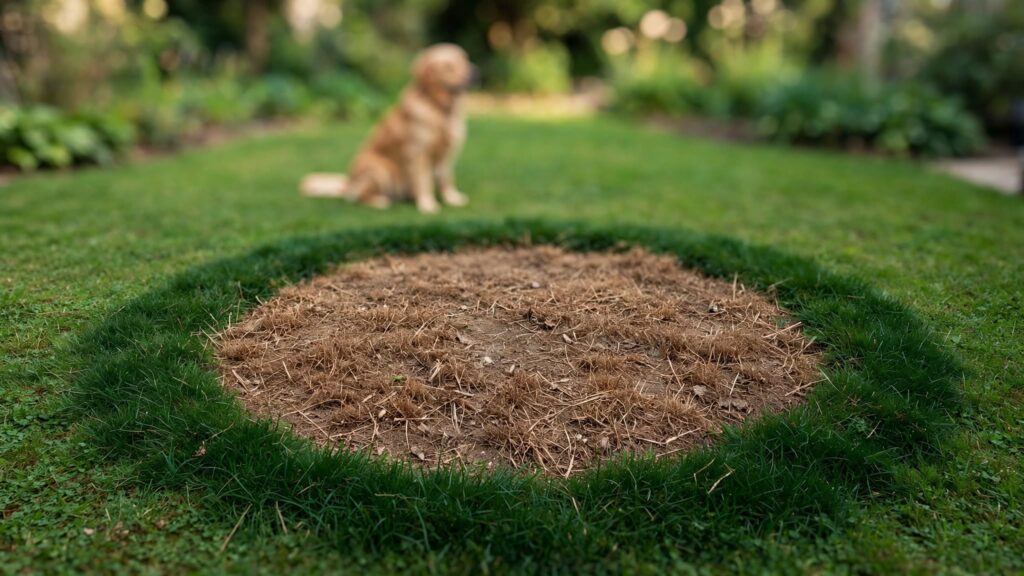
Those round brown patches with a dark green halo are unmistakable. Dog urine spots on grass are one of the most common lawn complaints among pet owners. The usual explanation blames acidity, but that is not what is happening. The real culprit is nitrogen concentration. Understanding that changes which solutions actually work. This guide explains the cause, the repair and genuine prevention.
What Actually Causes the Damage
Dog urine contains urea, which breaks down into nitrogen. Nitrogen is the main ingredient in lawn fertiliser, so a little of it is beneficial.
The problem is dose. A dog delivers a large amount of nitrogen onto a very small area all at once. That concentration burns the grass in the centre, exactly as spilled fertiliser would.
The dark green ring around the edge proves the point. Out there, the nitrogen has diluted to a beneficial level, so the grass grows greener and faster than the rest of the lawn.
Why Acidity Is Not the Issue
This myth leads people to waste money. Dog urine is roughly neutral to slightly acidic, and it is not acidic enough to damage turf.
Consequently, adding lime or gypsum to the soil does not help. It can actually make things worse by raising pH unnecessarily. Likewise, products marketed as urine neutralisers or dietary supplements that alter urine pH have little evidence behind them, and some may harm your dog’s urinary health. The American Veterinary Medical Association recommends discussing any dietary supplement with your vet first.
Why Female Dogs Get Blamed
It is about posture rather than chemistry. Female dogs tend to squat and empty their bladder in one spot, which concentrates the nitrogen.
Male dogs more often mark in small amounts across many locations, which spreads the load. Size matters too, since a large dog delivers more volume per visit.
Step 1: Water the Spot Immediately
This is the single most effective thing you can do, and it is free.
Follow your dog out with a watering can or hose and flush the area with plenty of water within a few minutes. Dilution drops the nitrogen concentration below the burn threshold.
Realistically, you will not catch every event. Even flushing the spots you do see makes a visible difference over a season.
Step 2: Repair the Existing Patches
Dead centres will not recover on their own and need reseeding.
- Rake out the dead grass thoroughly.
- Flush the area deeply with water to leach out the remaining nitrogen salts.
- Loosen the top two inches of soil.
- Mix in some compost.
- Sow grass seed matching your lawn, pressing it into firm contact with the soil.
- Keep it consistently moist for two to three weeks.
Our guide on how to fix bare spots in a lawn covers the full seeding routine, and our guide on when to plant grass seed explains the best time of year.
Step 3: Train a Designated Spot
This is the most durable solution. Choose an area of mulch, gravel or pea stone, ideally in a corner of the garden.
Then take your dog there on lead every time, and reward immediately after they go. Use a consistent verbal cue. Most dogs learn the routine within a few weeks, and some pick it up faster.
Step 4: Encourage More Water Intake
A well-hydrated dog produces more dilute urine, which does less damage.
Keep fresh water available at all times and refill bowls more often, since dogs drink more from clean cool water. Adding a little water to dry food helps too. Never restrict water to reduce urination.
Step 5: Choose More Tolerant Grass
Some species cope with nitrogen loading better than others.
- More tolerant. Perennial ryegrass and tall fescue.
- Less tolerant. Kentucky bluegrass and Bermuda grass.
Overseeding with a ryegrass or tall fescue blend improves resilience over time. These species also recover faster from damage.
Step 6: Reduce Other Nitrogen
If your dog is already fertilising parts of the lawn, adding more nitrogen compounds the burn.
Use a lower nitrogen fertiliser in areas your dog frequents, and apply it at the lower end of the recommended rate. Our guide on when to fertilize your lawn covers rates and timing.
Step 7: Keep the Lawn Generally Healthy
A strong lawn tolerates damage far better and fills in faster.
- Mow high, at 3 to 3.5 inches, for deeper roots
- Water deeply and infrequently
- Core aerate annually. See our guide on how to aerate a lawn
- Overseed thin areas each autumn
Mistakes to Avoid
- Do not add lime or gypsum, because acidity is not the cause.
- Do not restrict your dog’s water intake.
- Do not give urine-altering supplements without veterinary advice.
- Do not fertilise heavily in areas your dog uses.
- Do not expect dead centres to recover without reseeding.
- Do not use lawn chemicals without checking they are safe once dry for pets.
Final Thoughts
Dog urine spots on grass are a nitrogen overdose, not an acid burn. Flush the area with water straight away, reseed the dead centres properly, and train your dog to use a designated gravel or mulch area. Those three habits solve the problem far more reliably than any product sold to neutralise it.
Questions About Dog Urine Spots on Grass
Will lime or gypsum fix it?
No. The damage is caused by concentrated nitrogen, not acidity, so soil amendments do nothing.
Should I give my dog a supplement?
Only with veterinary advice. Products that alter urine pH have little evidence behind them.
What actually works?
Flushing with water straight away. Preventing dog urine spots on grass is mostly about dilution and a designated gravel toilet area.
Why is there a green ring around the patch?
Out there the nitrogen diluted to a beneficial level. That ring is the clearest proof dog urine spots on grass are a fertiliser burn.