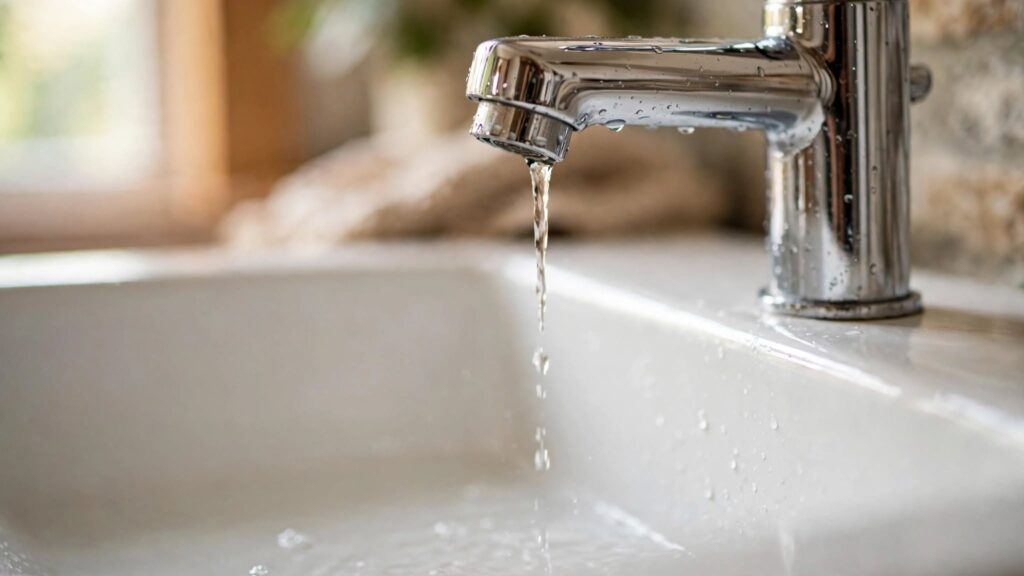
Low water pressure in one faucet is good news, oddly enough. When only a single tap is weak, the rest of your plumbing is fine. Therefore the problem is local, and local problems are cheap to fix. In most homes, low water pressure in one faucet comes down to a clogged aerator, a partly closed valve or a worn cartridge. This guide shows you how to find the cause in order, starting with the easiest.
First, Narrow Down the Problem
Run a few quick tests before you take anything apart.
- Check hot and cold separately. If only hot is weak, suspect the water heater or the hot supply valve.
- Check other fixtures. If they are strong, the issue is isolated to this faucet.
- Remove the aerator and run the tap. Strong flow without it means the aerator is the culprit.
These three tests take two minutes and point you straight at the cause.
Cause 1: A Clogged Aerator
The aerator is the small screened cap on the end of the spout. It catches sediment, rust flakes and mineral scale. Consequently, it is responsible for most cases of weak flow at a single tap.
How to Clean It
Unscrew the aerator by hand, turning counter-clockwise. If it is tight, wrap the tip in a cloth and use pliers so you do not scratch the finish. Then disassemble the screen and washer, keeping track of the order.
Next, soak the parts in white vinegar for 30 minutes. Scrub the screen with an old toothbrush and rinse thoroughly. Finally, reassemble and screw it back on snugly. For heavy buildup, our guide on how to remove hard water stains covers stronger descaling methods.
Cause 2: A Partly Closed Supply Valve
Look under the sink for two small shut-off valves. Someone may have left one partly closed after a repair. Turn each one fully counter-clockwise, then test the flow again.
Older multi-turn valves also seize up internally. If a valve turns freely but flow stays weak, the valve itself may need replacing.
Cause 3: A Worn or Clogged Cartridge
Inside a single-handle faucet sits a cartridge that mixes and controls flow. Debris lodges in it, or the internal seals wear down. As a result, pressure drops even though the supply is fine.
Shut off both supply valves first. Then remove the handle, pull the retaining clip and lift the cartridge out. Rinse it, inspect the seals and replace it if anything looks cracked or scaled. Bring the old cartridge to the store, since they are brand-specific. Our guide on how to fix a leaky faucet walks through cartridge removal for each faucet type.
Cause 4: A Kinked or Collapsed Supply Line
Flexible braided supply lines can kink behind the cabinet, especially after someone stores cleaning bottles under the sink. Clear the space and straighten the lines. Replace any line with a sharp bend or visible bulge.
Cause 5: Sediment in the Shut-Off or Pipe
If you recently had work done on the water main, sediment may have been stirred up. Close the supply valve, place a bucket underneath, disconnect the supply line and open the valve briefly into the bucket. Flushing it this way clears loose grit.
Cause 6: Galvanised Pipe Corrosion
Homes built before about 1960 often have galvanised steel pipes. Over decades, rust builds inward and narrows the opening. In that case, the affected branch needs replacing. This is a job for a licensed plumber.
Mistakes to Avoid
- Do not use metal pliers directly on a polished finish.
- Do not lose the small rubber washer inside the aerator.
- Do not force a seized shut-off valve, because the stem can break.
- Do not buy a universal cartridge. Match the brand and model.
- Do not skip turning off the water before opening a faucet body.
When to Call a Plumber
Call a professional if the weak flow spreads to other fixtures, if you see rusty water, or if you find corroded pipes that flake when touched. Likewise, get help if only the hot side is weak throughout the house, since that suggests a water heater problem. Our guide on how to flush a water heater explains the sediment side of that issue.
How to Prevent It
Clean aerators every six months, especially in hard water areas. In addition, exercise shut-off valves once a year by opening and closing them fully. If your water is very hard, consider a whole-house filter or softener. The EPA WaterSense program has guidance on efficient fixtures that resist clogging.
Final Thoughts
Low water pressure in one faucet is usually a five minute fix rather than a plumbing crisis. Start with the aerator, check the supply valves, then move on to the cartridge. Work through the causes in order and you will find it without replacing anything you did not need to.
Questions About Low Water Pressure in One Faucet
Why is only the hot side weak?
Suspect the hot supply valve or sediment from the water heater. Low water pressure in one faucet on the hot side only rarely involves the faucet itself.
How often should I clean the aerator?
Every six months in hard water areas, and once a year elsewhere.
Could a water softener help?
Yes, if scale keeps returning. Softening the supply prevents the mineral buildup that blocks aerators and cartridges in the first place.