Baseboards collect dust, pet hair, scuffs and splatter, yet almost nobody cleans them regularly. Learning how to clean baseboards properly takes less time than you expect. More importantly, there is a trick that keeps dust from settling back within a week. This guide covers the fast method, the deep clean and how to handle scuff marks without damaging the paint.
Why Baseboards Get So Dirty
Baseboards sit exactly where dust settles. Air currents push particles along the floor and the trim stops them. In addition, static electricity on painted and vinyl trim actively attracts dust.
Then there is mopping. Dirty mop water splashes onto the lower edge and dries there as a grey line. As a result, the top edge collects dust while the bottom collects grime.
What You Need
- Vacuum with a brush attachment
- Bucket of warm water
- A few drops of dish soap
- Microfibre cloths
- A magic eraser or melamine sponge
- Cotton swabs and an old toothbrush
- A dryer sheet
- Knee pads or a cushion
Step 1: Vacuum First, Always
Never start with a wet cloth. Wet dust turns into mud and smears into the paint texture.
Instead, run the brush attachment along the full length of the trim. Work along the top ledge, the face and the quarter round at the bottom. This single step removes most of the dirt.
Step 2: Wash With Warm Soapy Water
Add two or three drops of dish soap to warm water. Keep the solution weak, because too much soap leaves a sticky residue that attracts more dust.
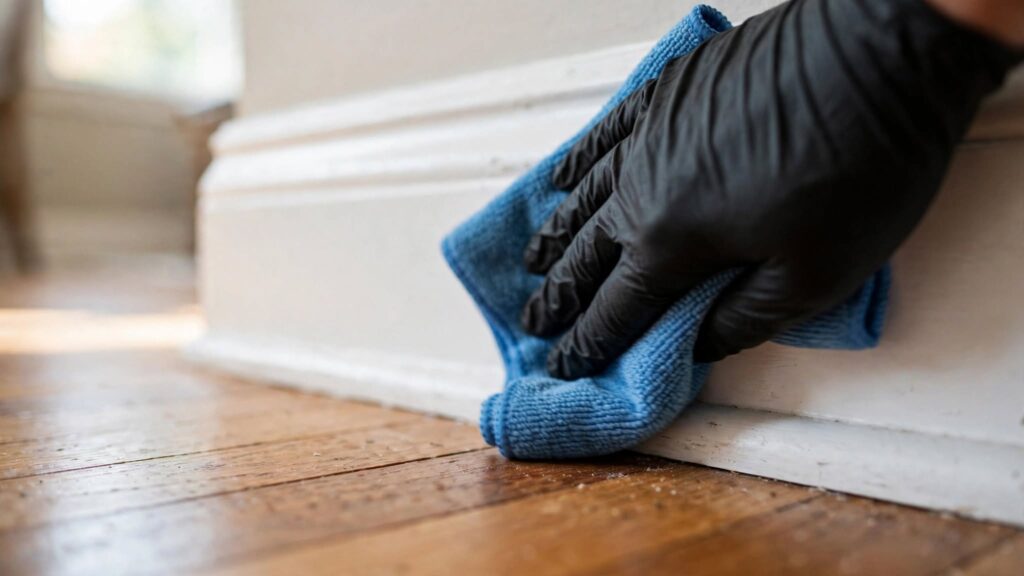
Wring the cloth out until it is barely damp. Then wipe in sections of about three feet. Rinse the cloth frequently, and change the water when it looks grey. Work from the top of the baseboard downward so drips land on areas you have not cleaned yet.
Step 3: Attack the Scuff Marks
Scuffs need a different approach from dust. Dampen a melamine sponge and rub the mark with light pressure.
Be careful here. These sponges are abrasive, so they can dull a satin or gloss finish if you scrub hard. Test in a hidden corner first, such as behind a door. For stubborn marks on flat paint, a touch-up with matching paint is often faster than scrubbing.
Step 4: Detail the Corners and Edges
Corners trap compacted dust that a cloth cannot reach. Use a cotton swab dipped in soapy water for inside corners. Then use an old toothbrush along the seam where the baseboard meets the floor.
If you find a dark gap along the top edge, that is usually a shrinkage crack. Clean it, then fill it with paintable caulk for a crisp finish.
Step 5: Dry the Trim
Go over everything with a dry microfibre cloth. Drying prevents water spots and stops moisture seeping into MDF trim, which swells permanently when wet.
Step 6: Wipe With a Dryer Sheet
This is the step that makes the difference. Rub a dryer sheet along the clean, dry baseboard.
The anti-static coating neutralises the charge that attracts dust. Consequently, your baseboards stay visibly cleaner for several weeks instead of several days. It also leaves a light fresh scent.
Cleaning Different Baseboard Materials
- Painted wood. Mild soapy water is safe. Avoid soaking the trim.
- Stained or varnished wood. Use a wood cleaner instead of water, since water can lift the finish.
- MDF. Use a barely damp cloth only, because MDF swells and cannot be repaired.
- Vinyl or PVC. Very durable. All-purpose cleaner is fine.
- Tile or stone trim. Avoid vinegar on natural stone, as acid etches it.
Mistakes to Avoid
- Do not skip vacuuming, because wet dust smears.
- Do not use too much soap, since residue attracts dirt.
- Do not scrub glossy paint with a melamine sponge, which creates dull patches.
- Do not let water pool along the floor seam.
- Do not use bleach on painted trim, as it can yellow the finish.
Work Smarter, Not Harder
Kneeling for an hour is what makes this job unpleasant. Try these instead:
- Attach a microfibre cloth to a sponge mop or Swiffer handle and clean standing up.
- Use a cushion or knee pads for detail work.
- Clean one room per week rather than the whole house at once.
- Do baseboards right before you mop, so splatter gets caught.
How Often Should You Clean Them?
Vacuum the trim monthly as part of normal cleaning. Then wash them two to four times a year. Homes with pets, children or forced-air heating need the higher end of that range. Controlling dust at the source helps too, and our guide on how often to change your air filter explains why. If dust seems excessive, our guide on how to reduce humidity in your house covers related air quality issues. The EPA notes that regular dust removal measurably improves indoor air quality.
Final Thoughts
Now you know how to clean baseboards without spending your whole weekend on the floor. Vacuum first, wash with barely soapy water, spot-treat scuffs, then finish with a dryer sheet. That last step is what keeps them looking clean long after you have put the bucket away.
Questions About How to Clean Baseboards
Why do they get dusty again so quickly?
Static attracts dust. That is exactly why the dryer sheet step matters so much.
Can I use a magic eraser everywhere?
Only on flat or matte paint, and gently. On satin or gloss finishes it leaves dull patches.
How often should this be done?
Vacuum monthly and wash two to four times a year. Homes with pets or forced-air heating need the upper end of that range when you clean baseboards.
Should I wash or vacuum first?
Always vacuum first. When you clean baseboards with a wet cloth before vacuuming, the dust turns to mud and smears into the paint texture.
What about the gap along the floor?
Clean baseboards right down to that seam with a toothbrush, then caulk any shrinkage crack along the top edge for a crisp finish.