Window screens quietly collect dust, pollen and spider webs until they grey out your view. Learning how to clean window screens restores a surprising amount of natural light. In addition, clean screens let far more air through when you open the windows. This guide covers how to clean window screens both in place and off the frame, plus how to patch small holes while you are there.
Why Screens Get So Dirty
A screen is essentially a filter sitting in the path of outdoor air. It catches pollen, road dust, soot and insect debris.
Rain then wets that layer and dries it into a grey film bonded to the mesh. Consequently, a quick wipe rarely helps. You need to flush the mesh from both sides.
What You Need
- Vacuum with a brush attachment
- A soft-bristled brush
- Bucket of warm water
- A few drops of dish soap
- A garden hose with a spray nozzle
- Microfibre cloths or a lint roller
- Screen patch kit or repair tape
Method 1: Clean Screens In Place
Use this for upper floors or screens that are fixed in position.
Step 1: Vacuum Both Sides
Run the brush attachment gently across the mesh. Support the screen lightly with your free hand so suction does not deform it. Work top to bottom in overlapping passes.
Step 2: Use a Lint Roller
This trick works remarkably well for fine dust. Roll it across the mesh and the adhesive lifts particles straight out of the weave.
Step 3: Wipe With Soapy Water
Add two drops of dish soap to warm water. Dampen a microfibre cloth, wring it well, then wipe in one direction. Avoid pressing hard, because screens stretch easily.
Step 4: Rinse and Dry
Wipe again with a clean damp cloth to remove soap residue. Then blot with a dry towel. Leave the window open until the mesh is fully dry.
Method 2: Remove and Wash Them
This gives much better results when you can take the screens out.
Step 1: Label as You Remove
Screens are rarely identical. Stick masking tape on each frame and write the room and window. This saves considerable frustration later.
Most screens have two small tabs or plungers. Squeeze them inward and pull the screen free. Work gently with older aluminium frames, since they bend.
Step 2: Dry Brush First
Lay each screen flat on a tarp or driveway. Then brush both sides with a soft brush to knock loose debris off. Doing this before wetting them prevents mud.
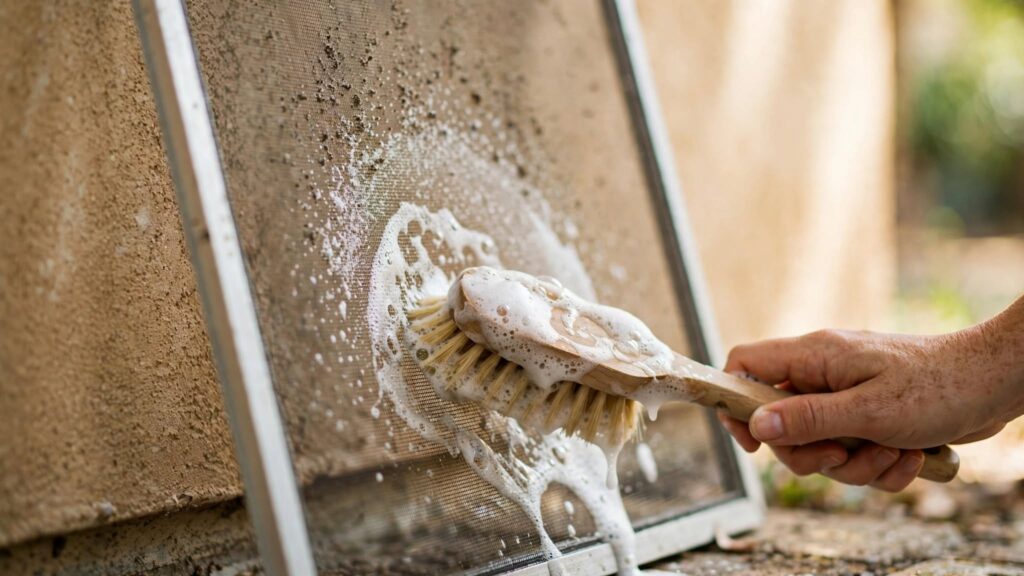
Step 3: Wash With Soapy Water
Dip the brush in warm soapy water and scrub both sides in gentle circles. Pay attention to the frame corners, where grime and webs collect.
Step 4: Rinse Thoroughly
Hose both sides with a moderate spray. Never use a pressure washer, because it will tear the mesh or pop it out of the spline channel.
Step 5: Dry Standing Up
Lean the screens against a wall or fence in the sun. They dry in about 20 minutes. Make sure the frames are completely dry before reinstalling, otherwise moisture sits in the window track.
Patch Small Holes While You Are There
Insects find any gap. For holes under half an inch, a self-adhesive screen patch does the job. Clean the area, cut the patch slightly larger than the hole and press it firmly in place.
For a tidier repair on fibreglass mesh, cut a square of matching mesh and dab clear waterproof adhesive around the edges. Larger tears mean re-screening the frame with new mesh and spline, which is an easy project with a cheap spline roller.
Mistakes to Avoid
- Do not use a pressure washer. It is the fastest way to ruin a screen.
- Do not scrub with a stiff or wire brush, since it breaks the mesh fibres.
- Do not clean screens in direct hot sun, because soap dries on before you rinse.
- Do not reinstall damp screens into the track.
- Do not stack wet screens on top of each other, as they imprint.
- Do not forget to label them.
How Often to Clean Them
Once a year suits most homes, ideally in spring after pollen season. However, clean them twice a year if you live near a busy road, a construction site or in a dusty region.
Many people combine this with other seasonal jobs. Our home maintenance checklist lays out what to tackle each season, and our guide on how to clean gutters pairs naturally with screen cleaning since you are already outside with a ladder.
A Note on Air Quality
Dirty screens reduce airflow when you ventilate, which matters more than most people realise. The EPA recommends natural ventilation as a simple way to improve indoor air quality. Clean mesh also traps less pollen against the window, which helps during allergy season. If humidity is a concern when you open windows, our guide on how to reduce humidity in your house explains when ventilating helps and when it does not.
Final Thoughts
Now you know how to clean window screens the right way. Always dry brush or vacuum before adding water, use gentle pressure and dry everything fully before reinstalling. Label the frames as you go, and the job stays simple next year too.
Questions About How to Clean Window Screens
Can I just hose them down in place?
It helps a little, but water alone turns dust into streaks. Dry brushing first makes all the difference.
Is a pressure washer ever safe?
No. It tears mesh and pushes it out of the spline channel.
How long does the job take?
About ten minutes per screen. Most people clean window screens once a year, in spring after pollen season.
Do I have to take them out?
Not necessarily. You can clean window screens in place with a vacuum, a lint roller and a barely damp cloth, though removal gives better results.