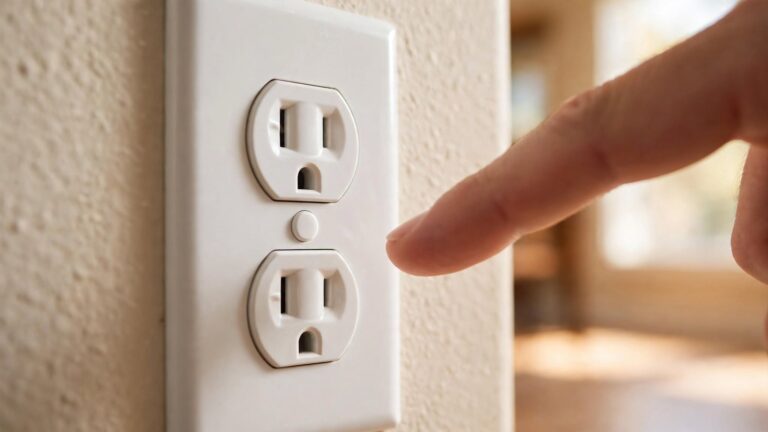
When a GFCI outlet keeps tripping, it is doing exactly what it was designed to do. These outlets watch for current leaking out of the circuit, which is the pattern that causes electrocution. Therefore a repeated trip is a warning, not a fault to be bypassed. This guide explains why a GFCI outlet keeps tripping and how to narrow down the cause safely.
How a GFCI Actually Works
A ground fault circuit interrupter compares the current flowing out on the hot wire with the current returning on the neutral. Those two should match almost exactly.
When they differ by as little as five milliamps, the device assumes current is escaping somewhere else, possibly through a person. It then cuts power in under a tenth of a second. Consequently, a GFCI is far more sensitive than a regular breaker, and it trips on conditions a breaker would ignore.
Cause 1: Moisture in the Outlet or Circuit
This is the most common reason by a wide margin. Water conducts electricity, so even dampness creates a small leakage path.
Check outdoor outlets, bathroom outlets and garage outlets for condensation or water intrusion. Outdoor boxes need a weather-resistant cover that closes over a plugged-in cord, not just a flip lid.
If an outlet has been rained on, open the cover and let it dry completely for 24 hours before resetting. Then fit a proper in-use cover.
Cause 2: A Faulty Appliance
A failing motor, a degraded heating element or damaged cord insulation all leak current to ground.
Here is how to test it methodically:
- Unplug everything on the circuit, including items in other rooms.
- Reset the GFCI. If it holds, the outlet itself is fine.
- Plug devices back in one at a time, waiting a few minutes between each.
- The device that trips it is your culprit.
Common offenders include old refrigerators, hair dryers, pressure washers, aquarium heaters and power tools with worn brushes. Also check for cords that have been pinched, chewed by pets or run under rugs.
Cause 3: The GFCI Itself Has Worn Out
These devices have a working life of roughly ten to fifteen years. The internal sensing circuitry degrades and eventually trips without cause.
Press the test button. A healthy GFCI trips with a firm click and resets cleanly. If it feels mushy, will not reset, or trips with nothing plugged in and no moisture present, replace it. Replacement outlets are inexpensive.
Cause 4: Too Many Outlets on One GFCI
A single GFCI often protects several downstream outlets wired from its load terminals. Each one contributes a tiny amount of natural leakage.
Add enough outlets and long cable runs, and the cumulative leakage approaches the trip threshold. In that case, splitting the circuit or fitting individual GFCI outlets solves it.
Cause 5: A Wiring Fault
Several wiring problems cause persistent tripping:
- Neutral and ground touching somewhere in the circuit
- A shared neutral between two circuits
- Line and load terminals reversed at the GFCI
- Damaged cable inside a wall, sometimes from a nail or screw
- Loose connections at a downstream outlet
These need a licensed electrician. Diagnosing them involves working on live circuits and tracing cable runs.
Cause 6: A Lightning Strike or Power Surge
A nearby strike or utility surge can damage the sensing electronics. If tripping began right after a storm, replacing the device is usually the answer.
A Safe Troubleshooting Order
- Look for visible moisture and let anything damp dry fully.
- Unplug every device on the circuit, then reset.
- Reintroduce devices one by one.
- Press the test and reset buttons to check the device itself.
- Count how many outlets the GFCI protects.
- If none of that explains it, call an electrician.
Mistakes to Avoid
- Never replace a GFCI with a standard outlet to stop the tripping. That removes the protection the code requires there.
- Do not keep resetting it repeatedly without investigating.
- Do not work on wiring without switching off the breaker and testing that the circuit is dead.
- Do not use an outdoor outlet without a weather-resistant in-use cover.
- Do not ignore a burning smell or discoloured faceplate. Switch off the breaker and call an electrician immediately.
Where GFCI Protection Is Required
Current electrical codes require GFCI protection in kitchens, bathrooms, laundry areas, garages, unfinished basements, crawlspaces and all outdoor locations. In short, anywhere water and electricity could meet.
The Consumer Product Safety Commission recommends testing every GFCI in your home monthly using the test button. That habit takes two minutes and genuinely saves lives.
Related Checks Worth Doing
Moisture problems that trip outdoor GFCIs often trace back to drainage. Our guide on how to clean gutters and our guide on getting rid of a musty smell in the basement both deal with water reaching places it should not. While you are testing safety devices, also check your alarms using our guide on how often to replace smoke detectors.
Final Thoughts
When a GFCI outlet keeps tripping, treat it as useful information. Check for moisture first, then isolate appliances one at a time, then test the device itself. Never defeat the protection to make the nuisance stop, because that outlet is there precisely because the location is risky.
Questions About a GFCI Outlet That Keeps Tripping
Can I replace it with a normal outlet?
No. Code requires GFCI protection in that location precisely because water is nearby.
How do I find which appliance is at fault?
Unplug everything, reset, then reintroduce devices one at a time with a few minutes between each.
Do these outlets wear out?
Yes, after roughly ten to fifteen years. A GFCI outlet that keeps tripping with nothing plugged in and no moisture present usually needs replacing.