A musty smell in the basement is a moisture problem wearing a disguise. That earthy, damp odour comes from microbial growth, and microbes need water to survive. Therefore, air freshener and scented candles only hide the symptom. This guide shows how to track down the source of a musty smell in the basement, eliminate it and keep the space dry long term.
What Causes the Smell
The odour you notice is made of compounds released by mould and mildew as they grow. They thrive when relative humidity climbs above about 60 percent.
Basements are naturally prone to this. They sit below grade, stay cool, and have limited airflow. Consequently, warm humid air entering a cool basement condenses on walls and floors. That moisture then feeds growth in carpet, cardboard, wood and drywall.
Step 1: Measure the Humidity
Start with data instead of guesswork. Buy an inexpensive hygrometer and place it in the middle of the basement.
Aim for 30 to 50 percent relative humidity. Readings above 60 percent explain the smell on their own. The EPA recommends keeping indoor humidity below 60 percent to control mould growth.
Step 2: Find the Moisture Source
Work through these possibilities in order.
Check Outside First
Most basement moisture comes from outside. Walk the perimeter and look for downspouts that discharge next to the foundation. Extensions should carry water at least four feet away.
Also check that the soil slopes away from the house. A fall of six inches over the first ten feet is the usual target. Clogged gutters cause more wet basements than anything else, and our guide on how to clean gutters covers that job safely.
Look for Interior Leaks
Inspect around the water heater, washing machine hoses and any supply lines. Our guide on how to find a water leak explains how to confirm one using your water meter.
Check for Condensation
Touch the cold water pipes and the walls. Beads of water indicate condensation rather than a leak. Insulating cold pipes solves that quickly.
Inspect the Walls and Floor
Look for white chalky deposits, which are mineral salts left by water passing through concrete. Dark staining low on the wall points to seepage.
Step 3: Remove What Has Absorbed the Odour
Porous items hold the smell even after the air dries out. Be ruthless here.
- Throw out damp cardboard boxes and replace them with sealed plastic bins.
- Remove old carpet and padding that has ever been wet.
- Discard water-stained drywall and insulation.
- Wash fabrics, or dispose of anything with visible growth.
Step 4: Clean the Hard Surfaces
Scrub concrete walls and floors with a solution of one cup of white vinegar per gallon of water. Vinegar kills most mould species and leaves no toxic residue.
For heavier growth, use a detergent solution and scrub with a stiff brush. Importantly, never mix bleach with ammonia or vinegar. Wear gloves, eye protection and an N95 mask while you work.
Step 5: Dry the Space Out
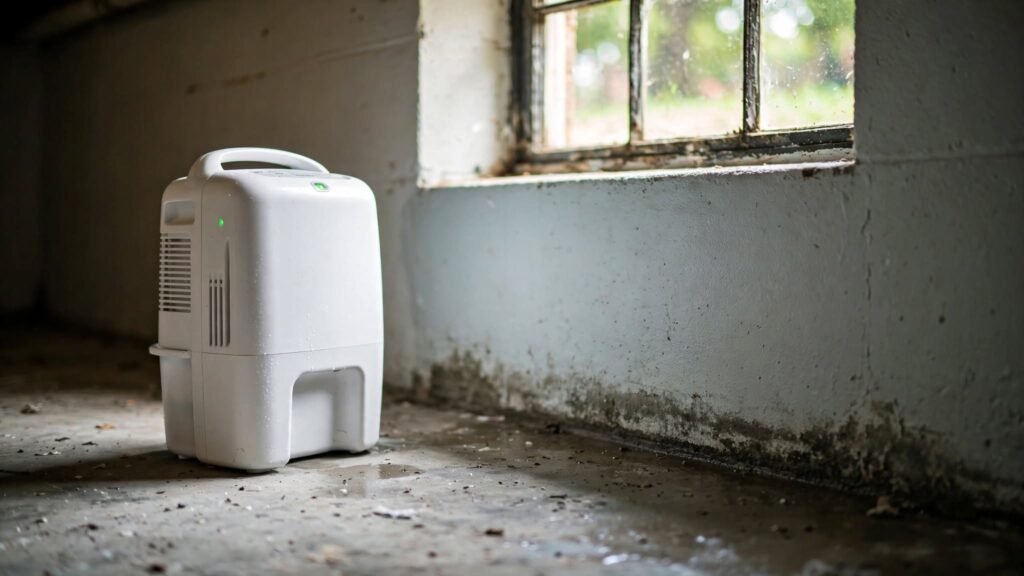
Run a dehumidifier sized for the square footage and set it to 45 percent. Empty it daily, or run a hose to a floor drain so it operates continuously.
In addition, place fans to move air across damp surfaces. Open windows only when outdoor air is drier than indoor air, because humid summer air makes a cool basement worse rather than better.
Step 6: Absorb Residual Odour
Once the space is genuinely dry, set out odour absorbers. Activated charcoal works best, and open containers of baking soda help too. Replace them monthly.
Step 7: Prevent It Coming Back
- Keep the dehumidifier running through humid months.
- Extend downspouts and maintain the grade around the foundation.
- Seal foundation cracks with hydraulic cement.
- Apply masonry sealer to bare concrete walls.
- Insulate cold water pipes to stop condensation.
- Test your sump pump twice a year.
- Store belongings on shelves rather than directly on the floor.
Our guide on how to reduce humidity in your house covers whole-home strategies that support this.
Mistakes to Avoid
- Do not mask the smell with fragrance while the moisture continues.
- Do not open windows on a humid day and expect improvement.
- Do not lay carpet on a basement slab that has ever been damp.
- Do not paint over mould, because it keeps growing underneath.
- Do not skip protective gear when scrubbing growth.
When to Call a Professional
Call a specialist if growth covers more than about ten square feet, if water enters through the walls during every rain, or if anyone in the house has breathing problems. Structural waterproofing and interior drainage systems are not DIY projects.
Final Thoughts
A musty smell in the basement always traces back to water. Measure the humidity, fix the drainage outside, remove porous items that have absorbed the odour, then run a dehumidifier continuously. Solve the moisture and the smell disappears on its own.
Questions About a Musty Smell in Basement Spaces
Will a dehumidifier alone fix it?
It controls the symptom well, but the smell returns if water keeps entering. Fix the drainage outside too.
Is the smell harmful?
The odour itself is not, though it indicates mould growth, which can affect people with asthma or allergies.
Why does it get worse in summer?
Warm humid air condenses on cool basement walls. That is why a musty smell in basement areas often peaks in July rather than winter.