A sticking drawer is one of those small frustrations you notice every day. To fix a drawer that will not slide, you first need to know what it runs on. Older furniture uses bare wood runners, while most modern cabinets use metal or plastic glides. Each has its own failure points. This guide covers both, starting with the quickest fixes.
Step 1: Empty It and Take It Out
Remove everything from the drawer, because weight distorts the box and hides the real problem.
Then pull the drawer all the way out. Wood runner drawers usually lift out once fully extended. Metal glide drawers often have small plastic release levers on each side, or they simply need a firm tug past the stop.
Now look inside the opening with a flashlight. Often you will find something obvious, such as an item that fell behind the drawer.
Step 2: Diagnose the Cause
Match what you see to the likely fix.
- Bare wood rubbing wood. Needs cleaning and lubricating.
- Metal glide grinding or clicking. Debris in the track, or a damaged roller.
- Drawer drops at the front. Loose glide screws or a worn roller.
- Drawer racks sideways. One glide has shifted out of alignment.
- Front panel loose. The drawer box joints have come apart.
- Only sticks in summer. Humidity has swollen the wood.
Fixing Wood Runner Drawers
Clean the Runners
Wipe both the drawer runners and the rails inside the cabinet. Years of dust mixed with old wax creates a gummy film. Scrape it off with a plastic scraper, then wipe with mineral spirits on a cloth.
Sand the High Spots
Look for shiny polished areas on the runners. Those are the friction points. Sand them lightly with 120 grit paper, then smooth with 220 grit. Remove very little material at a time.
Lubricate With Wax, Not Oil
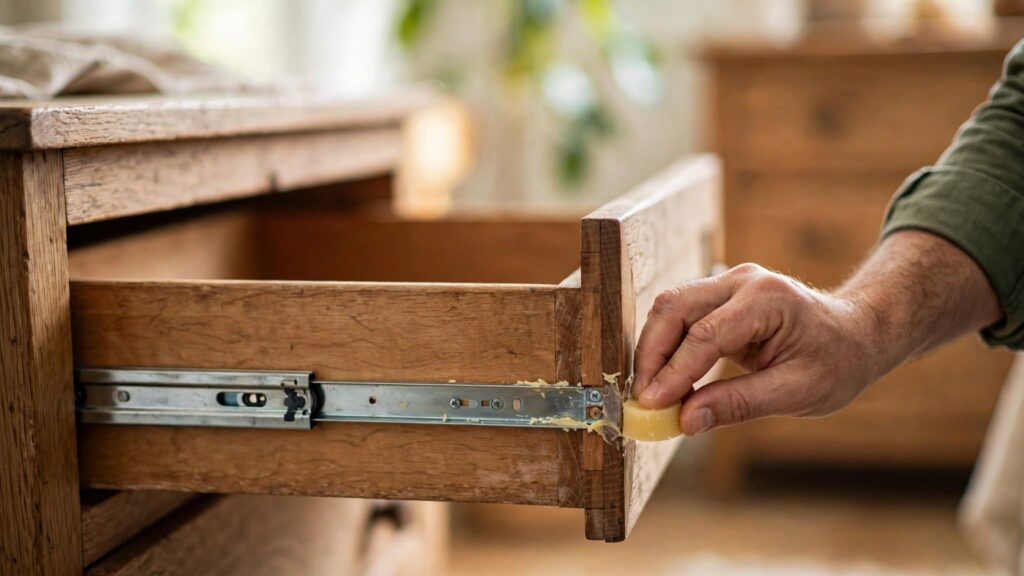
This is the key step. Rub paraffin wax, a candle stub or a bar of soap along the runners and rails.
Dry lubricant is the right choice here. Oil and grease soak into bare wood, attract dust and eventually turn sticky. Paste wax works well too. Apply it, let it haze, then buff with a cloth.
Deal With Swelling
If the drawer only binds in humid weather, sand the sides slightly and seal all surfaces with shellac or varnish. Sealing stops the wood absorbing moisture. Our guide on how to reduce humidity in your house addresses the underlying cause.
Fixing Metal Glide Drawers
Clear the Track
Vacuum both halves of the glide. Then wipe the channels with a cloth. Crumbs, hair and small objects cause most binding.
Check the Rollers
Spin each nylon roller with your finger. It should turn freely. A flat-spotted or seized roller makes the drawer drag and tilt.
Replacement rollers are cheap and often clip on. Alternatively, replace the whole glide set, which usually costs little more.
Tighten and Realign the Glides
Check every screw holding the glides to the cabinet and the drawer box. Tighten any that have worked loose.
If screw holes have stripped in particleboard, pack them with wood glue and toothpicks, let that cure, then redrive the screw. Next, confirm both glides sit level and parallel. Measure from the cabinet floor to each glide at the front and the back. Even a few millimetres of difference causes racking.
Lubricate Correctly
Metal glides do want lubricant, but use a dry silicone spray or white lithium grease sparingly. Avoid general purpose oil, which collects grit.
Fixing a Loose Drawer Box
If the box itself has racked out of square, no amount of adjustment will help. Dismantle the loose corner, clean out old glue, then reglue and clamp it square. Check with a tape measure corner to corner, since equal diagonals mean square. Add small corner blocks for extra strength.
A drawer front that has pulled away usually needs longer screws from inside the box. Our guide on how to fix a cabinet door that will not close covers similar hardware adjustment on the doors nearby.
Mistakes to Avoid
- Do not use oil or cooking spray on bare wood runners. It turns gummy.
- Do not overfill drawers, because weight bends glides permanently.
- Do not force a stuck drawer, as you can break the front off.
- Do not sand heavily, since an over-sanded drawer rattles.
- Do not mix glide brands on the same drawer.
- Do not ignore a seized roller, because it wears a groove in the track.
Keep Drawers Running Smoothly
Wax wood runners once a year and vacuum metal tracks when you clean. In addition, distribute heavy items such as pans across several drawers rather than loading one. Avoid slamming, which loosens screws over time. Adding these checks to your seasonal rounds helps, and our home maintenance checklist covers what to inspect when. The Consumer Product Safety Commission also recommends anchoring dressers to the wall, since open drawers make tall furniture unstable.
Final Thoughts
To fix a drawer that will not slide, work out what it runs on first. Clean and wax wood runners, but clear and align metal glides. Both repairs take about ten minutes, and most of the time you will not need to buy a single part.
Questions About How to Fix a Drawer That Will Not Slide
Should I use oil on wood runners?
No. Oil soaks in, attracts dust and turns gummy. Use paraffin wax, a candle stub or paste wax instead.
Why does the drawer tilt down at the front?
A seized or flat-spotted roller, or loose glide screws. Both are quick to fix.
Can overloading cause this?
Yes. Weight bends metal glides permanently, so spread heavy items across several drawers.
What if the glides look fine?
Check the rollers individually. Each should spin freely, and one seized roller is enough to stop a drawer sliding smoothly.
Can humidity cause this?
On wood runners, yes. A drawer that will not slide only in summer has swollen, so sand lightly and seal the bare wood.
Is it worth replacing the glides?
Often yes, since a full set costs little. A drawer that will not slide on worn rollers rarely improves with cleaning alone.
How do I stop it happening again?
Wax wood runners yearly and vacuum metal tracks. A drawer that will not slide is almost always telling you the runners need attention.