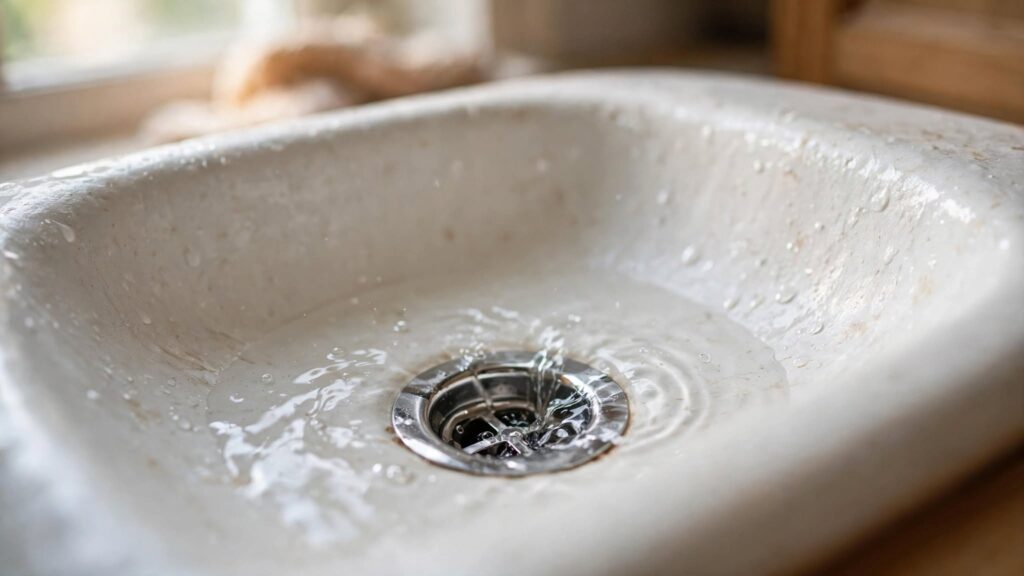
A slow draining bathroom sink is one of the most common household annoyances. Water pools around the drain, takes a minute to disappear and often smells faintly sour. Fortunately, you rarely need a plumber. In most cases, a slow draining bathroom sink is caused by a soft plug of hair and soap scum just below the stopper. This guide walks through four fixes, from easiest to most thorough.
Why Bathroom Sinks Drain Slowly
Bathroom sinks collect a very specific kind of gunk. Hair, shaving stubble, toothpaste and soap combine into a sticky mass. That mass then catches on the pivot rod of the stopper assembly, which sits only a few inches down the pipe.
Because the clog sits so close to the surface, you can usually reach it by hand. However, grease and mineral scale sometimes build up further along in the P-trap. Therefore, it helps to work through the fixes in order.
What You Need
- Rubber gloves
- A plastic hair-removal drain tool or a bent wire coat hanger
- Baking soda and white vinegar
- An adjustable wrench or channel-lock pliers
- A bucket and old towels
- A small bottle brush
Fix 1: Clean the Stopper and Pivot Rod
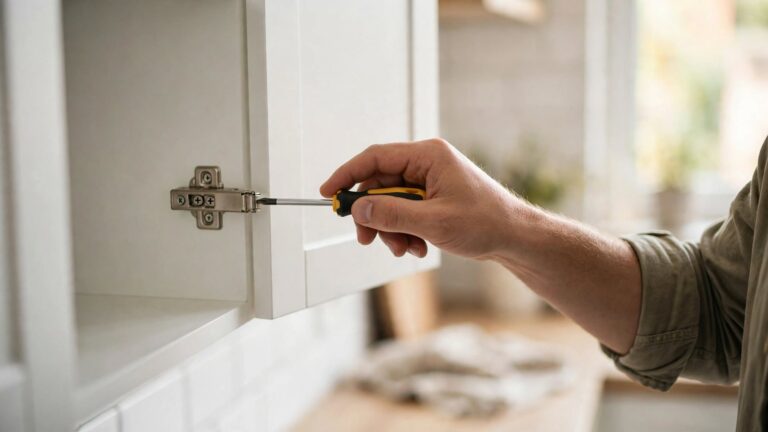
Start here, because this solves most cases. First, lift the stopper out. Some pull straight up, while others need a quarter turn. If it will not budge, look under the sink for a thin metal pivot rod clipped to the drain body.
Next, unclip the spring clip and pull the rod out an inch. The stopper will then lift free. After that, scrape the buildup off with a paper towel and wash the stopper in hot soapy water. Finally, reassemble and test the drain.
Fix 2: Pull the Clog With a Drain Tool
If the sink is still slow, feed a plastic barbed drain tool down the opening. Push it in about eight inches, twist it gently, then pull it out slowly. Expect something unpleasant on the end.
Repeat two or three times until the tool comes back clean. Then run hot water for a full minute to flush loose debris downstream.
Fix 3: Flush With Baking Soda and Vinegar
This step dissolves the soap film that coats the pipe walls. Pour half a cup of baking soda into the drain, followed by one cup of white vinegar. The mixture will foam.
Let it sit for 15 minutes. Meanwhile, boil a kettle of water. After the wait, pour the hot water down slowly. Avoid boiling water if you have PVC pipes, and use very hot tap water instead.
Fix 4: Clean the P-Trap
If the drain is still sluggish, the P-trap needs attention. This is the U-shaped pipe under the sink.
Step 1: Set Up
Place a bucket directly beneath the trap and lay towels around it. There is always some standing water inside.
Step 2: Loosen the Slip Nuts
Turn the two plastic slip nuts counter-clockwise by hand. If they are metal or stuck, use channel-lock pliers gently. Avoid over-tightening later, since plastic threads strip easily.
Step 3: Clean It Out
Remove the trap and dump it into the bucket. Then scrub the inside with a bottle brush and rinse it thoroughly.
Step 4: Check the Wall Pipe
While the trap is off, shine a light into the pipe going into the wall. If you see buildup, clear it with a hand auger. Our guide on how to unclog a drain explains that process step by step.
Step 5: Reassemble and Test
Hand-tighten the slip nuts and make sure the washers seat correctly. Then run water and watch for drips. Tighten slightly more only if you see a leak.
Mistakes to Avoid
- Do not reach for chemical drain cleaner first. It often sits on top of a hair clog without dissolving it.
- Do not use a metal coat hanger on a porcelain sink. It scratches the finish.
- Do not over-tighten plastic slip nuts, because they crack.
- Do not skip the bucket. The trap always holds water.
When to Call a Plumber
Call a professional if several fixtures drain slowly at the same time, if you hear gurgling from other drains, or if water backs up. Those signs point to the branch or main line rather than the sink itself. Similarly, get help if you find corroded metal pipes that flake when touched.
How to Keep It Draining Fast
Install a mesh drain screen and empty it weekly. In addition, wipe hair out of the basin instead of rinsing it down. Flush the drain with hot water once a week, and clean the stopper monthly. If your water is hard, our guide on how to remove hard water stains will help with the scale that builds up around the drain. The EPA also notes that regular fixture checks catch small plumbing problems early.
Final Thoughts
A slow draining bathroom sink looks like a plumbing emergency but rarely is one. Clean the stopper first, then pull the clog, then flush the pipe. If all three fail, drop the P-trap and clean it directly. Twenty minutes of work usually restores full flow for months.
Questions About a Slow Draining Bathroom Sink
Why does the smell come back?
Because the film coating the pipe walls feeds bacteria. Flushing with hot water weekly keeps it under control.
Can I use a chemical cleaner instead?
You can, but it rarely works on hair. A slow draining bathroom sink is usually blocked by a physical plug that the chemical simply flows around.
How do I know the clog is not deeper?
Run another fixture at the same time. If only this basin is slow, the clog is local. If the bath or toilet is also sluggish, the branch line needs attention.