Knowing how to clean a range hood filter is one of those small jobs with an outsized payoff. A greasy filter cannot pull smoke or steam out of your kitchen. Worse, that accumulated grease is a genuine fire risk directly above your burners. Fortunately, you do not need to scrub. This guide shows how to clean a range hood filter using a simple soaking method that does the work for you.
Why Filters Get So Greasy
Cooking releases airborne fat droplets along with steam. The hood pulls that air through a mesh or baffle filter, which traps the grease by design.
Over a few months, the trapped grease turns thick and sticky. Air then struggles to pass through. As a result, your kitchen stays smoky and smells linger. In addition, the motor works harder and wears out sooner.
Know Which Filter You Have
Check before you start, because one type must never be washed.
- Aluminium mesh filters. Thin layered metal screens. Washable and the most common type.
- Stainless steel baffle filters. Heavy overlapping panels in pro-style hoods. Washable and dishwasher safe.
- Charcoal or carbon filters. Black granular inserts used in ductless recirculating hoods. These absorb odour and cannot be washed. Replace them every three to six months.
What You Need
- A large pot or a sink you can fill with boiling water
- Baking soda
- Degreasing dish soap
- A soft brush or old toothbrush
- Rubber gloves
- Paper towels
Step 1: Remove the Filter
Switch off the hood first. Most mesh filters have a small spring-loaded tab or a pull ring. Push the tab and tilt the filter down, then slide it out of its track.
Baffle filters usually lift straight up and out. Take a photo before removal if you are unsure how they go back.
Step 2: Boil Water and Mix the Solution
Bring a large pot of water to a rolling boil. Then add, carefully and a little at a time:
- A quarter cup of baking soda
- A generous squeeze of degreasing dish soap
Add the baking soda slowly, because it foams up immediately. The combination of heat, alkalinity and surfactant breaks the grease down chemically.
Step 3: Soak the Filter
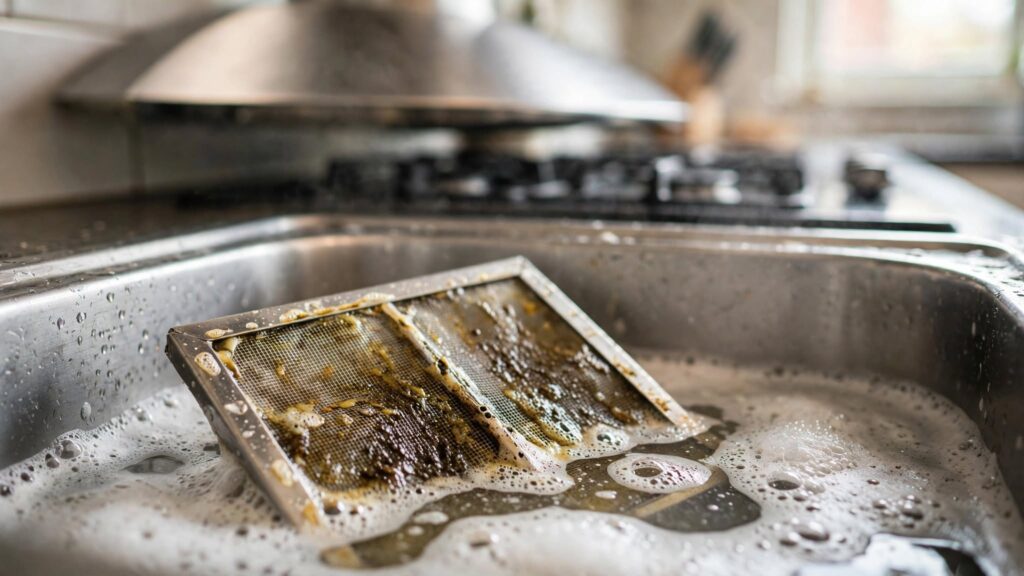
Lower the filter into the pot using tongs. If it does not fit, fill the sink with boiling water and the same ingredients instead.
Let it soak for 10 to 15 minutes. Meanwhile, you will see grease rise and float on the surface. For very heavy buildup, flip the filter halfway through and top up with fresh hot water.
Step 4: Brush Lightly and Rinse
Lift the filter out and brush gently along the mesh with a soft brush. Almost everything should release with very little pressure.
Then rinse under hot running water until no suds remain. Hold it up to a light. You should see daylight evenly through the mesh.
Step 5: Dry Completely
Shake off excess water and blot with paper towels. After that, stand the filter on edge for 20 minutes to air dry fully. Never reinstall a wet filter, since trapped moisture encourages corrosion in the housing.
Step 6: Clean the Hood Itself
While the filter is out, wipe the inside of the hood canopy. Grease collects there too. Use hot soapy water and a cloth, then dry with a microfibre towel.
Also check the fan blades if you can reach them safely. Finally, wipe the exterior in the direction of the grain if it is stainless steel.
The Dishwasher Option
Metal filters can go in the dishwasher on the hottest cycle. Place them upright so water hits the mesh directly, and run them alone without detergent pods designed for dishes only.
Be aware that aggressive dishwasher detergent sometimes discolours aluminium to a dull grey. It is harmless but permanent, so the soaking method is safer for visible filters.
Mistakes to Avoid
- Never wash a charcoal filter. Water destroys it and it must be replaced instead.
- Do not use oven cleaner or caustic degreaser on aluminium, because it pits the metal.
- Do not scrub hard with steel wool, which crushes the mesh and reduces airflow.
- Do not reinstall a damp filter.
- Do not pour grease-laden water down the drain. Let it cool, skim the fat and bin it.
Pouring hot grease down the sink is a common cause of blockages. Our guide on how to unclog a drain explains what happens when it solidifies in the pipe.
How Often to Clean It
Match the schedule to how you cook.
- Daily frying or wok cooking. Every month.
- Average household cooking. Every two to three months.
- Light use. Twice a year.
- Charcoal filters. Replace every three to six months.
Grease buildup near a cooktop is a recognised fire hazard, and the NFPA lists cooking equipment as the leading cause of home fires. Keeping the hood clean genuinely reduces that risk. While you are working through kitchen maintenance, our guides on how to clean a dishwasher and how to clean a microwave cover the other two appliances that need regular attention.
Final Thoughts
Now you know how to clean a range hood filter without any scrubbing. Boiling water, baking soda and dish soap dissolve the grease while you do something else. Check which filter type you have first, soak it properly, and dry it fully before it goes back in.
Questions About How to Clean a Range Hood Filter
Can I put it in the dishwasher?
Metal mesh and baffle filters, yes. Charcoal filters, never, because water destroys them.
How do I know when it needs doing?
Hold it up to a light. If you cannot see through the mesh evenly, it is overdue.
Does a clean filter really improve extraction?
Noticeably. Once you know how to clean a range hood filter, you will find the kitchen clears smoke and steam far faster.