If you own a dog or cat, you already know that vacuuming alone does not solve the problem. Learning how to remove pet hair from carpet means dealing with hair that has worked its way deep into the fibres. Static electricity holds it there, and suction often cannot overcome that grip. This guide covers seven methods for removing pet hair from carpet, ordered from quickest to most thorough.
Why Pet Hair Clings So Stubbornly
Pet hair is not simply lying on the surface. Two forces hold it in place.
First, static electricity builds up as pets move across the carpet. That charge bonds the hair to the fibres. Second, the hair itself has a barbed cuticle that catches on carpet loops, rather like a tiny hook. Therefore, you need to break the static or physically lift the hair out.
Method 1: Vacuum in Multiple Directions
Technique matters more than the machine. Most people vacuum in one direction only.
Instead, go over each area north to south, then east to west, then diagonally. Changing direction lifts the pile and releases trapped hair. Also move slowly, because fast passes do not give the brush roll time to work. Finally, empty the canister when it is half full, since suction drops sharply after that.
Method 2: Use a Rubber Squeegee
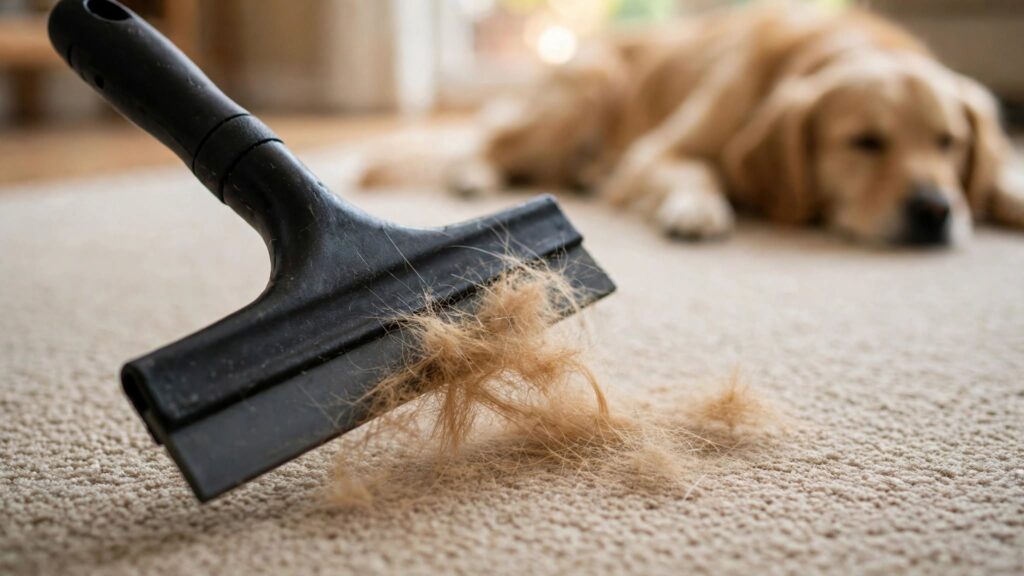
This is the most effective trick for small areas. Take a window squeegee and drag it across the carpet toward you using short, firm strokes.
The rubber creates static that pulls hair upward. You will be genuinely surprised by how much comes up after you have already vacuumed. Collect the clumps by hand, then vacuum the loosened remainder.
Method 3: Baking Soda Pre-Treatment
Baking soda loosens hair and deodorises at the same time. Sprinkle it evenly over the carpet, using about one cup per room.
Let it sit for 15 minutes. Meanwhile, it absorbs odour and reduces static cling. After that, vacuum thoroughly in two directions. This method is especially good before guests arrive.
Method 4: Fabric Softener Spray
Mix one part liquid fabric softener with three parts water in a spray bottle. Then mist the carpet lightly. Do not soak it.
Wait until the carpet is nearly dry, then vacuum. The softener neutralises static, so hair releases easily. Test a hidden area first, because some softeners can darken light carpet.
Method 5: A Carpet Rake or Stiff Brush
A carpet rake is a wide-headed tool with stiff bristles. Pull it through the pile in overlapping rows.
It lifts matted fibres and brings embedded hair to the surface. In addition, raking revives flattened traffic lanes. A stiff-bristled broom works reasonably well as a substitute.
Method 6: Rubber Gloves on Low-Pile Carpet
Put on a pair of dry rubber washing-up gloves and run your hands firmly over the carpet. Hair sticks to the rubber in rolls that you can lift straight off.
This is slow for a whole room. However, it is excellent for stairs, carpeted edges and the area around pet beds.
Method 7: Rent a Carpet Cleaner for a Deep Reset
Twice a year, a hot water extraction machine pulls out hair, dander and the oils that hold them. Vacuum thoroughly first, because wet hair becomes much harder to lift.
Use a pet-formula solution, then make a slow pass with suction only to remove as much water as possible. Finally, run fans until the carpet is completely dry.
Mistakes to Avoid
- Do not use a worn brush roll. Cut away wrapped hair regularly or it stops rotating.
- Do not vacuum with a full bag or canister.
- Do not over-wet the carpet, because trapped moisture causes mildew.
- Do not use a stiff metal brush on looped Berber carpet, as it snags and pulls.
- Do not skip testing fabric softener on a hidden patch.
Reduce the Hair at the Source
Cleaning is easier when less hair falls in the first place.
- Brush your pet daily, outdoors if possible. This cuts shedding dramatically.
- Use a deshedding tool during spring and autumn coat changes.
- Feed a diet with adequate omega fatty acids for coat health.
- Wash pet bedding weekly.
- Place washable mats in favourite napping spots.
- Run a HEPA air purifier to catch airborne dander.
Hair and dander also load up your furnace filter quickly. Our guide on how often to change your air filter explains the schedule for homes with pets. For odour that lingers in soft furnishings, our guide on how to clean a mattress uses a similar approach. The EPA notes that regular vacuuming with a HEPA filter reduces household allergens.
Final Thoughts
Now you know how to remove pet hair from carpet using seven practical methods. Change your vacuum direction, break the static with baking soda or a squeegee, and rake the pile to lift embedded hair. Combine two or three of these and even a heavy-shedding household stays manageable.
Questions About How to Remove Pet Hair From Carpet
Why does my vacuum miss so much?
Static bonds the hair to the fibres, and a single-direction pass cannot break that grip. Changing direction is the fix.
Is a special pet vacuum worth buying?
A model with a motorised brush roll and HEPA filtration genuinely helps. Technique still matters more than the machine.
Does brushing my dog really reduce it?
Considerably. Daily brushing outdoors is the most effective way to remove pet hair from carpet before it ever gets there.
Does baking soda actually help?
Yes. It reduces static, which is the main reason hair clings. It is the cheapest way to remove pet hair from carpet before vacuuming.
What about hair on stairs?
Use dry rubber gloves. They remove pet hair from carpet edges and treads far better than any vacuum attachment.