That loud bang when you shut off a tap has a name, and learning how to stop water hammer protects your plumbing. The noise happens when fast-moving water slams to a halt and sends a shock wave through the pipes. Over time, those shocks loosen joints and crack fittings. Fortunately, most cases of water hammer are fixable in an afternoon with basic tools.
What Causes Water Hammer
Water in a pipe has real momentum. When a valve closes suddenly, that moving column of water has nowhere to go. Therefore it hits the closed valve and bounces back as a pressure spike.
Older homes had vertical air chambers near each fixture to absorb that spike. However, those chambers slowly fill with water and stop working. In addition, these factors make the problem worse:
- Excessive household water pressure
- Fast-closing solenoid valves in washing machines and dishwashers
- Pipes that are not strapped to the framing
- Undersized supply lines
- A failing pressure regulator
Step 1: Check Your Water Pressure
Start here, because high pressure is behind many cases. Screw a pressure gauge onto an outdoor spigot or the washing machine bib. Then read it with no water running.
Normal household pressure is 40 to 60 psi. Anything above 80 psi is too high and stresses every fixture in the house. If yours reads high, adjust the pressure reducing valve near the main shut-off. Turn its adjustment screw counter-clockwise in quarter turns, rechecking as you go.
Step 2: Recharge the Air Chambers
This costs nothing and fixes a surprising number of cases. Follow these steps in order.
- Shut off the main water supply to the house.
- Open the highest faucet in the home, such as an upstairs bathroom.
- Then open the lowest faucet, usually a basement sink or outdoor spigot.
- Let the system drain completely, which takes about 15 minutes.
- Close the lowest faucet first, then turn the main back on.
- Finally, let each faucet run until it sputters clear, starting from the lowest.
Draining the system lets air refill the chambers. As a result, they can cushion pressure spikes again.
Step 3: Install Water Hammer Arrestors
Modern arrestors use a sealed piston and spring instead of a plain air pocket. Consequently, they never waterlog and need no maintenance.
The best place to fit them is close to the fixture causing the noise. Washing machines are frequent offenders, and screw-on arrestors for washer hose bibs install in two minutes with no soldering. For other fixtures, a plumber can add tee-mounted arrestors to the supply lines.
Step 4: Secure Loose Pipes
Sometimes the bang is partly a rattle. Pipes that are not fastened to joists move and strike the framing.
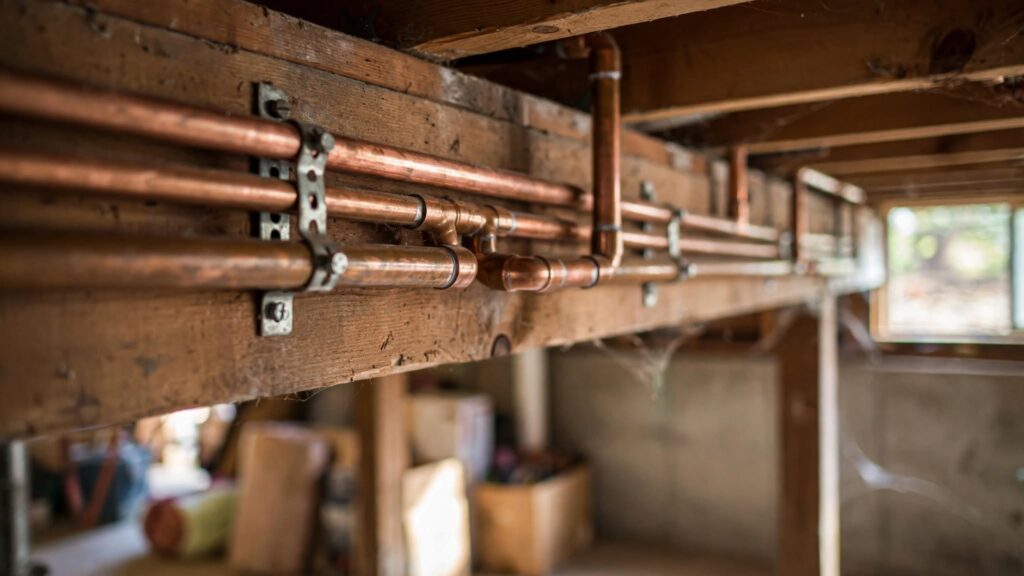
Inspect exposed runs in the basement, crawlspace or utility room. Add plastic-lined pipe straps every six to eight feet. Importantly, do not clamp copper pipe tightly against bare wood or metal, because it needs room to expand. Use cushioned clips instead.
Step 5: Check Toilet Fill Valves
A worn fill valve can slam shut and cause a thud after every flush. Replacing it usually solves the noise. Our guide on how to fix a running toilet covers fill valve replacement, and our guide on how to replace a toilet flapper handles the other common tank part.
Mistakes to Avoid
- Do not ignore it. Repeated shocks genuinely damage joints and can cause a burst line.
- Do not clamp pipes rigidly, since that transfers noise into the structure.
- Do not crank the pressure regulator wide open in one go. Adjust gradually.
- Do not install an arrestor far from the offending valve, because it loses effectiveness.
- Do not confuse water hammer with a steady ticking, which is usually normal pipe expansion.
Water Hammer or Something Else?
Match the sound to the cause.
- Single loud bang when a valve closes. That is classic water hammer.
- Rapid machine-gun chatter. Usually a loose washer in a valve.
- Ticking as hot water runs. Normal thermal expansion of the pipe.
- Gurgling. A drain venting issue rather than a supply issue. Our guide on why a toilet gurgles when the shower runs explains that one.
When to Call a Plumber
Call a professional if pressure stays above 80 psi after adjustment, if the regulator needs replacing, or if arrestors must be soldered into the supply lines. Likewise, get help if you find corroded or leaking joints. The EPA WaterSense program notes that well-maintained plumbing at correct pressure also reduces water waste.
Final Thoughts
Now you know how to stop water hammer in a logical order. Measure your pressure, drain the system to recharge the air chambers, then add arrestors and strap loose pipes. Each step is straightforward, and together they usually silence the banging for good.
Questions About How to Stop Water Hammer
Can water hammer burst a pipe?
Yes, eventually. Repeated pressure spikes loosen joints and fatigue fittings, which is why it is worth fixing rather than tolerating.
Does it only happen with washing machines?
No, but fast-closing solenoid valves in washers and dishwashers are the most common trigger.
Do arrestors need replacing?
Sealed piston arrestors are maintenance free. Learning how to stop water hammer with arrestors is therefore a permanent fix, unlike recharging air chambers.
Will higher water pressure make it worse?
Yes, considerably. Anyone trying to stop water hammer should measure pressure first and bring it under 60 psi before fitting anything else.