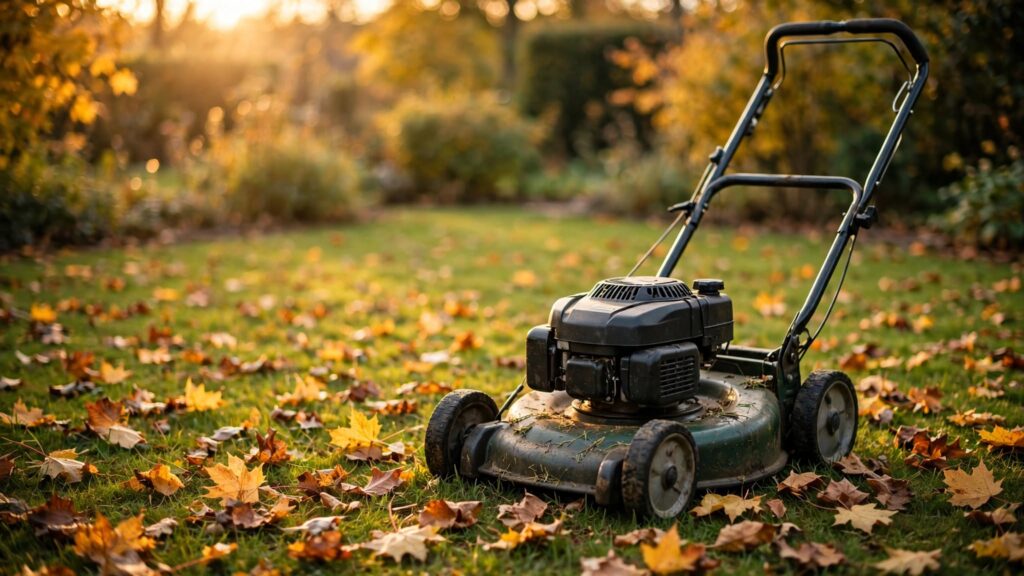
Everyone wants a date, but the calendar is the wrong guide here. Knowing when to stop mowing in fall depends on soil temperature and grass growth rather than the month. Stopping too early leaves grass long enough to mat down under snow, while stopping too late stresses plants heading into dormancy. This guide explains how to judge the right moment and what height to leave.
The Real Signal: Soil Temperature
Grass growth slows dramatically once soil temperature drops below about 50 degrees Fahrenheit. Below that point, the plant redirects energy into its roots for winter.
An inexpensive soil thermometer takes the guesswork out. Push it about two inches into the ground in the morning, and take readings over several days rather than relying on one.
In practical terms, stop mowing once soil temperatures stay consistently below 50 degrees and you notice the grass is no longer growing between cuts.
The Simple Observation Test
If you do not have a thermometer, watch the grass itself. Keep mowing while it is still growing, and stop when it is not.
Check roughly weekly. When two weeks pass and the lawn has not grown enough to need cutting, the season is over. That is usually late October or November in northern regions, and December or later in southern ones.
Timing by Grass Type
Cool Season Grasses
Kentucky bluegrass, fescue and perennial ryegrass keep growing well into autumn. They often need mowing after the trees have dropped their leaves.
These grasses benefit from continued mowing right up until growth stops. Do not put the mower away just because the weather has turned cold.
Warm Season Grasses
Bermuda, zoysia and St. Augustine go dormant earlier and turn brown. Once a warm season lawn has browned off completely and stopped growing, mowing is finished for the year.
These grasses dislike being cut short in autumn, so avoid the gradual lowering advice that applies to cool season turf.
The Right Final Height
This matters more than the exact stopping date.
- Cool season grasses. Aim for a final height of 2 to 2.5 inches.
- Warm season grasses. Leave them at their normal summer height.
Why does length matter? Grass left too long, above about 3 inches, mats down under snow and creates ideal conditions for snow mould. Grass cut too short, below 2 inches, has less leaf area to photosynthesise and a shallower root system, which leaves it vulnerable to cold and desiccation.
Lower the Height Gradually
Do not scalp the lawn in one final cut. That removes too much leaf at once and shocks the plant.
Instead, lower the deck one notch at a time over the last two or three mows of the season. Follow the one third rule throughout, which means never removing more than a third of the blade height in a single cut.
Keep Mowing Over Fallen Leaves
Here is a useful bonus. Running the mower over dry fallen leaves chops them into small pieces that break down into the soil.
That returns organic matter and nutrients to the lawn, and it saves you raking. However, do not let a thick wet layer sit on the grass, because it blocks light and smothers the turf. Mulch leaves while they are dry and in manageable quantities.
What Else to Do Before You Stop
Autumn is the most valuable season for lawn work in cool climates.
- Apply a winterising fertiliser. Our guide on when to fertilize your lawn covers the timing.
- Aerate compacted soil. See our guide on how to aerate a lawn.
- Overseed thin areas. Our guides on when to plant grass seed and how to fix bare spots in a lawn explain how.
- Clear leaves and debris. Anything left on the lawn invites disease.
- Sharpen the blade. Doing it now means you are ready in spring. See our guide on how to sharpen lawn mower blades.
Winterise the Mower Too
Once the final cut is done, prepare the machine for storage.
Either drain the fuel tank completely or add a fuel stabiliser and run the engine for a few minutes so treated fuel reaches the carburettor. Then change the oil, clean the deck underside, remove the spark plug and store the mower somewhere dry.
Untreated petrol degrades within about 30 days and gums up carburettors, which is the single most common reason mowers will not start in spring.
Mistakes to Avoid
- Do not stop mowing on a date, because growth varies year to year.
- Do not scalp the lawn in one final cut.
- Do not leave cool season grass above 3 inches going into winter.
- Do not mow frozen or frosted grass, since the blades are brittle and break.
- Do not mow wet soggy ground, as the mower causes ruts and compaction.
- Do not leave a thick wet leaf layer on the lawn.
- Do not store the mower with untreated fuel in the tank.
For region-specific autumn lawn care timing, the University of Minnesota Extension publishes detailed seasonal guidance.
Final Thoughts
Deciding when to stop mowing in fall comes down to watching growth rather than the calendar. Keep cutting while the grass grows, aim for a final height of 2 to 2.5 inches on cool season turf, and lower the deck gradually over the last few mows. Then prepare the mower properly so spring starts easily. Our guide on how to winterize your home covers the rest of the autumn list.
Questions About When to Stop Mowing in Fall
Is there a date I should aim for?
No. Watch soil temperature and growth instead, because the right week shifts every year.
What height should the last cut be?
Two to 2.5 inches for cool season grass, lowered gradually over the final few mows.
Should I rake or mulch the leaves?
Mulch them while dry. Deciding when to stop mowing in fall is easier if you keep cutting over dry leaves until growth genuinely stops.
Can I mow if there is frost?
No. Frozen blades are brittle and snap. Wait until it thaws, which is part of judging when to stop mowing in fall.