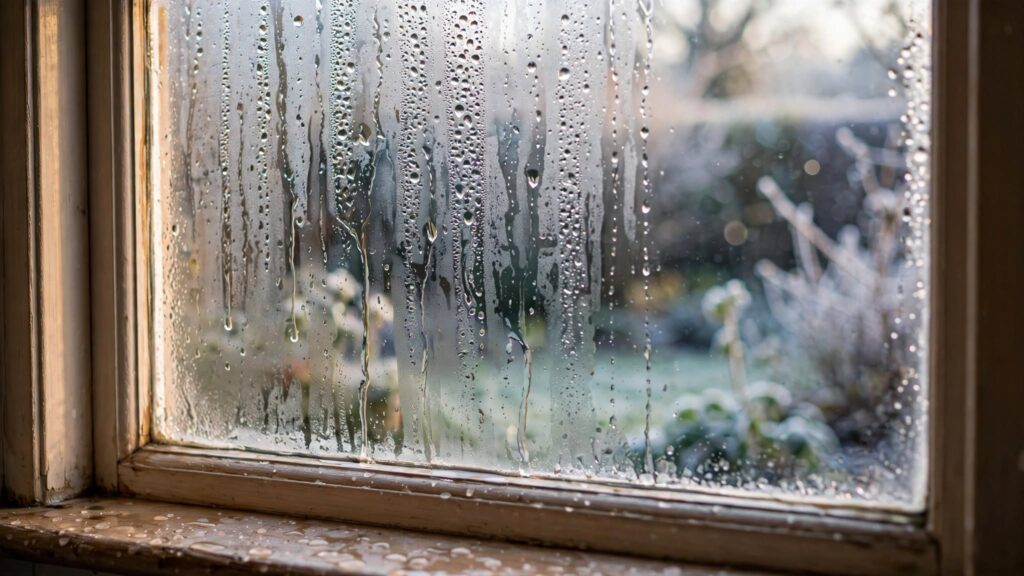
Waking up to streaming windows is more than an annoyance. That water runs onto the sill, soaks into the frame and eventually grows mould. Learning how to stop condensation on windows means understanding that the glass is only where the problem shows up. The actual cause is too much moisture in the air meeting a cold surface. This guide covers how to stop condensation on windows by tackling both sides of that equation.
Why Condensation Forms
Air holds a certain amount of water vapour depending on its temperature. Warm air holds a lot, and cold air holds very little.
When warm humid indoor air touches cold glass, it cools below its dew point. The vapour it was carrying then condenses into liquid water on the surface. Therefore you have two ways to fix it: reduce the moisture in the air, or make the glass warmer.
Which Side Is It On?
Check this first, because it tells you a great deal.
- Inside the glass. Indoor humidity is too high. This is the common case and the one you can fix.
- Outside the glass. Harmless. It usually means your windows are insulating well.
- Between the panes. The seal on a double-glazed unit has failed. Cleaning will not help, and the glass unit needs replacing.
Step 1: Measure Your Indoor Humidity
Buy an inexpensive hygrometer rather than guessing. Aim for 30 to 50 percent relative humidity in winter, and closer to 30 percent during very cold spells.
Above 50 percent, condensation becomes almost inevitable on single glazing and on the coldest corners of double glazing. The EPA recommends keeping indoor humidity below 60 percent specifically to limit mould growth.
Step 2: Find Where the Moisture Comes From
A typical household generates a surprising amount of water vapour every day. The main sources are:
- Showers and baths
- Cooking, especially boiling and simmering
- Drying laundry indoors
- Unvented gas heaters
- Houseplants, particularly in large numbers
- Aquariums
- Breathing, which alone adds litres per person per day
- A damp basement or crawlspace below
Step 3: Ventilate at the Source
Removing moisture where it is created is far more effective than dealing with it later.
Run the bathroom extractor fan during every shower and for twenty minutes afterwards. Likewise, use the kitchen range hood whenever you cook, and make sure it vents outside rather than recirculating. Our guide on how to clean a range hood filter explains why a clogged filter cripples that airflow.
Also check that your clothes dryer vents outdoors and that the duct is clear. Our guide on how to clean a dryer vent covers that, and a blocked vent dumps both moisture and lint into the house.
Step 4: Run a Dehumidifier
If ventilation alone is not enough, a dehumidifier gives you direct control. Set it to 45 percent and place it where the problem is worst.
Basements often feed humidity to the whole house, so treating the basement sometimes fixes upstairs windows. Our guide on getting rid of a musty smell in the basement addresses that, and our guide on how to reduce humidity in your house covers whole-home strategy.
Step 5: Warm the Glass Surface
Now work on the other half of the problem. These measures raise the glass temperature so air no longer reaches its dew point against it.
- Fit interior window insulation film, which creates a still air gap. It is inexpensive and remarkably effective on single glazing.
- Open curtains and blinds during the day, because tightly closed drapes keep the glass cold.
- Leave trickle vents open if your windows have them.
- Improve air circulation in corners by moving furniture a few inches off exterior walls.
- Replace failed double-glazed units, since a broken seal loses all its insulating value.
Step 6: Move Air Around the Room
Still air in a cold corner condenses first. Running a ceiling fan clockwise on low pushes warm air down and keeps the room temperature even. Our guide on which way a ceiling fan should turn in winter explains the setting.
Mistakes to Avoid
- Do not simply wipe the windows daily and treat that as the solution.
- Do not dry laundry on radiators, because it releases litres of water into the air.
- Do not block trickle vents or seal a house completely airtight without mechanical ventilation.
- Do not use unvented portable gas or paraffin heaters indoors.
- Do not ignore black spots on the sill, since those are mould. Our guide on how to get rid of mold in the bathroom covers safe removal.
- Do not assume condensation between panes can be fixed by cleaning.
Do Not Over-Correct
Air that is too dry causes its own problems, including cracked wood, static shocks and irritated sinuses. Staying between 30 and 50 percent is the target rather than driving humidity as low as possible.
Also remember that sealing air leaks reduces drafts but can raise humidity, because less air exchanges with outside. Balance the two. Our guides on how to seal air leaks and how to winterize your home cover doing that sensibly.
Final Thoughts
Now you know how to stop condensation on windows properly. Measure the humidity, cut moisture at its source with good ventilation, then warm the glass with film or better glazing. Treating both the air and the surface is what keeps windows dry all winter instead of just until tomorrow morning.
Questions About How to Stop Condensation on Windows
What if it is on the outside?
That is harmless and usually a sign your glazing insulates well.
What if it is between the panes?
The sealed unit has failed. Cleaning will not help, and the glass needs replacing.
Is a dehumidifier the answer?
Often, yes. To stop condensation on windows you need indoor humidity between 30 and 50 percent, plus good ventilation at the source.
Can sealing air leaks make it worse?
It can. A tighter house exchanges less air, so to stop condensation on windows you may also need mechanical ventilation.