Bare patches spread if you leave them, because weeds colonise open soil within days. Learning how to fix bare spots in a lawn is straightforward, provided you deal with the cause first. Seeding over a patch that is bare for a reason simply wastes the seed. This guide covers diagnosis, repair and the watering routine that actually gets grass established.
Step 1: Work Out Why the Spot Is Bare
Each cause needs a different response, so spend a few minutes here.
- Heavy foot traffic. Soil is compacted and hard. You may need a path instead.
- Dog urine. Patches are round with a darker green ring around the edge.
- Deep shade. Under trees or on the north side of buildings.
- Grubs. The turf lifts away like a loose carpet with no roots underneath.
- Fungal disease. Irregular patches, sometimes with visible lesions on the blades.
- Buried debris or rock. Dig down and you hit something solid.
- Spilled fertiliser or chemicals. Sharply defined dead area.
- Poor drainage. Soil stays wet long after rain.
Lift a corner of turf at the edge of the patch and look at the roots. Healthy white roots mean a surface problem. Missing roots point to grubs or disease.
What You Need
- Garden rake and a hand cultivator
- Grass seed matching your existing lawn
- Topsoil or compost
- Starter fertiliser, which is high in phosphorus
- Straw or seed blanket
- A watering can or sprinkler
- A sharp spade
Step 2: Clear and Loosen the Area
Remove all dead grass, thatch and debris with a rake. Then pull any weeds, taking care to get their roots.
Next, break up the soil to a depth of two or three inches with a hand cultivator or the corner of a rake. This matters more than people expect, because seed will not root into hard compacted ground.
Scrape the edges of the patch so there is no hard boundary between bare soil and existing turf.
Step 3: Improve the Soil
Mix an inch or two of good topsoil or compost into the loosened area. Compost improves both drainage and water retention, which sounds contradictory but is exactly what seedlings need.
Then level the patch so it sits very slightly below the surrounding lawn. It will settle to level as the soil compacts naturally. A patch mounded above grade gets scalped by the mower.
Step 4: Choose and Sow the Right Seed
Match the seed to your existing lawn, or the repair will stand out in colour and texture.
- Cool season lawns. Kentucky bluegrass, perennial ryegrass or fescue blends.
- Warm season lawns. Bermuda or zoysia, though these spread by runners and often fill in without seed.
- Shady areas. A fine fescue blend.
- High traffic areas. Perennial ryegrass, which establishes fastest.
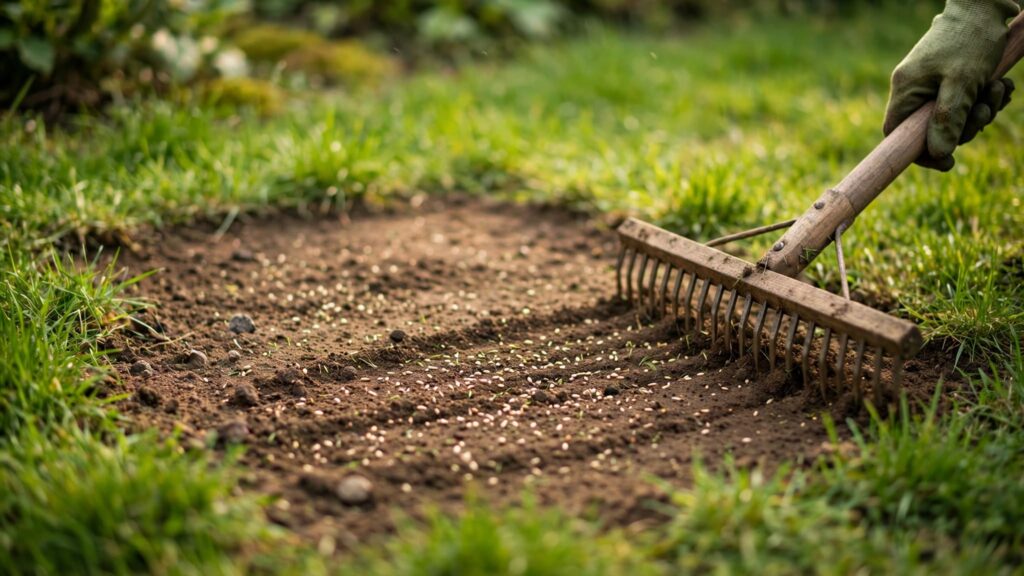
Sow more thickly than the bag suggests for patch repair, roughly 15 to 20 seeds per square inch. Then rake very lightly so seed sits just under the surface. Finally, press it down with the back of the rake or walk over it, because seed needs firm contact with soil.
Step 5: Feed and Cover
Apply a starter fertiliser at the labelled rate. The high phosphorus content supports root development specifically.
Then spread a thin layer of straw, or lay a seed blanket. The covering keeps moisture in, stops birds taking the seed and prevents washout during rain. You should still see soil through it, so do not pile it on.
Step 6: Water Correctly, Which Is the Hard Part
Germinating seed cannot be allowed to dry out, even once. This is where most repairs fail.
- Days 1 to 10. Water lightly two or three times a day. Keep the top inch consistently damp.
- Days 10 to 21. Water once a day, a little more deeply.
- Weeks 4 to 6. Reduce to every other day, watering deeply.
- After that. Move to the normal one inch per week.
Germination takes 5 to 10 days for ryegrass and up to 21 days for bluegrass, so be patient with slower species.
Step 7: Protect and Mow
Keep foot traffic and pets off the patch for at least three weeks. A few garden stakes with string do the job.
Wait until the new grass reaches about 3 inches before the first mow. Then set the mower high and make sure the blade is sharp, because a dull blade tears young seedlings out of the ground. Our guide on how to sharpen lawn mower blades covers that.
Timing Matters
Seeding at the wrong time of year is a common reason repairs fail. Early autumn is ideal for cool season grasses, while late spring suits warm season grasses. Our guide on when to plant grass seed explains the windows in detail.
Fix the Underlying Cause
- Compaction. Core aerate. See our guide on how to aerate a lawn.
- Dog urine. See our guide on dog urine spots on grass.
- Shade. Prune the canopy or switch to a shade-tolerant ground cover.
- Grubs. Treat with beneficial nematodes or a targeted product in late summer.
- Low fertility. Follow our guide on when to fertilize your lawn.
- Moss or weeds moving in. See our guides on moss in lawns and clover in lawns.
Mistakes to Avoid
- Do not throw seed onto hard unprepared soil.
- Do not let the seedbed dry out during germination.
- Do not bury seed more than a quarter inch deep.
- Do not apply weed killer for at least four weeks after seeding.
- Do not mow until the new grass reaches 3 inches.
- Do not use a seed type that does not match your lawn.
For region-specific seeding advice, the University of Minnesota Extension provides detailed guidance on establishing new grass.
Final Thoughts
Now you know how to fix bare spots in a lawn properly. Diagnose the cause, loosen and improve the soil, sow matching seed thickly, then keep it damp for three solid weeks. The watering routine is what makes or breaks the repair, so plan it before you sow.
Questions About How to Fix Bare Spots in a Lawn
Why did my seed fail last time?
Almost always because the seedbed dried out. Germinating seed must stay damp for two to three weeks.
Can I just scatter seed on top?
No. Seed needs firm contact with loosened soil, so rake it in and press it down.
When is the best time?
Early autumn for cool season grass. Trying to fix bare spots in a lawn during midsummer heat rarely works.
How thickly should I sow?
More heavily than the bag states. To fix bare spots in a lawn, aim for 15 to 20 seeds per square inch so the patch knits together.
Can I use weed killer afterwards?
Not for at least four weeks. Herbicide will kill the seedlings you are trying to establish when you fix bare spots in a lawn.